If you’ve worked with me (Kristen!) for more than five minutes, you know I love a good system. Clean, logical, efficient — a system that gives you clarity instead of chaos.
But here’s something we talk about a lot at Alchemy: every team has different strengths. And while Brooke is brilliant at big ideas, writing, relationship-building, and saying the one sentence that changes everything… she is
not (and she will be the first to tell you this) a natural system-builder.
And that’s okay.
Because she has me.
And she has Kali.
And we are system people to our core.
the week Brooke’s newsletter system revolted
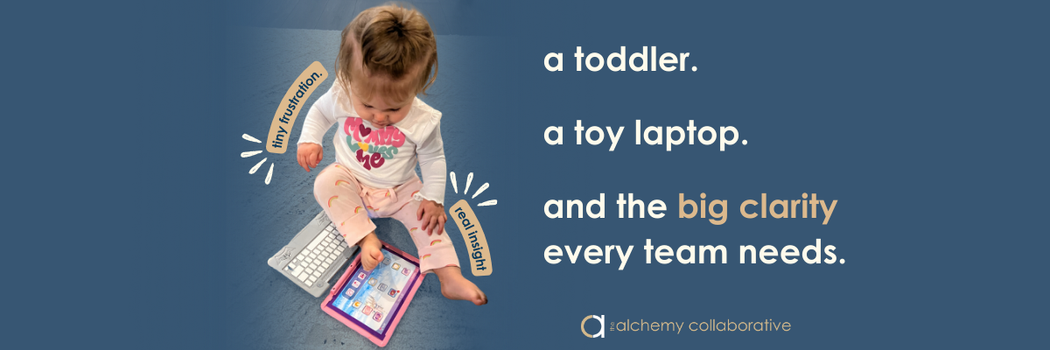
Last week, Brooke’s original newsletter system — the one she lovingly cobbled together months ago — finally tapped out. A process that used to “kind of work” was suddenly taking triple the time, creating friction instead of helping her flow.
And truly, watching Brooke try to describe what was happening inside that old system felt a little like watching someone try to explain a dream. Lots of “well, then I click this… and then sometimes it takes me here… or it doesn’t… I don’t know.”
That was the moment Kali and I stepped in.
We sat down with her, asked all the zoomed-out, 100-foot-view questions she doesn’t naturally ask, and rebuilt the entire thing so it actually matched the way Brooke thinks and works. Not prettier. Not fancier. Just functional, which is all a system needs to be. And if you're reading this blog posts, that means our system worked because she's posting the content.
It reminded me of something we see with districts all the time:
Systems fail not because people are bad at building them, but because they were never designed for how people actually work.
what this showed me about “unlocking genius”
Earlier this month, one of our dearest clients, friends and all around leadership guru, Owens Saylor, said something that’s been sitting with me:
“The major responsibility of the leader is to unlock everybody else’s genius. If they’re just task doers, they won’t care. But when they own it, they share your value for the outcome.”
This is exactly what broken systems prevent.
When a system works against you, you shrink into task-mode.
You stop offering ideas.
You stop improving the process.
You just try to survive it.
But when a system is rebuilt in a way that honors how you think, move, and make decisions?
That’s when your genius comes out.
And honestly, that’s what happened last week: Brooke’s brilliance wasn’t the problem. The system was. Once we redesigned it, she stepped right back into the creative, clear, high-level leader she is.
how this connects to our districts
We see this everywhere:
A social media process that needs eight people and a prayer.
A story submission workflow that collects the wrong info.
A communications “system” that is really just someone remembering texts from principals.
Districts don’t need more task-doers.
They need systems that unlock everyone’s voice and make it easy for staff to share ownership of the mission.
That’s why we build story forms.
That’s why we centralize workflow.
That’s why we ask the annoying-but-necessary questions.
That’s why we rework systems when they stop working...for our clients and for ourselves.
Because the goal isn’t efficiency (although we believe this is the cherry on top).
The goal is unlocking genius.
a system isn’t successful because it looks organized — it’s successful because it unlocks people.