

content marketing vs. social media: what rise taught us about building a home for your stories
December 2, 2025

In district comms, the confusion comes up all the time: “Isn’t content marketing just… posting on social?”


But working with RISE STEM Academy this fall reminded us that posting and storytelling are NOT the same thing and schools feel the gap every day.


Because the real question for districts isn’t what to post.


It’s where does our story live?


when everyone wants to “tell their story,” but nothing has a home

This came up early with RISE. During one of our sessions, Cynthia asked a deceptively simple question:

“The stories you’re sharing... where are those going?”


A question we find ourselves asking everywhere.


In RISE. In Fleming County. Even in educational organizations and co-ops across the state.  In every district that is trying to build trust, show impact, and share real classroom moments.


Everyone wants to tell their story. Almost no one knows where that story should live.


For years, schools have defaulted to the only place that felt available: social media. It’s fast, visible, immediate, and entirely dependent on an algorithm you don’t control.


Social is great for distribution.


But it can’t be your home.


from posting to storytelling: the shift happening at rise

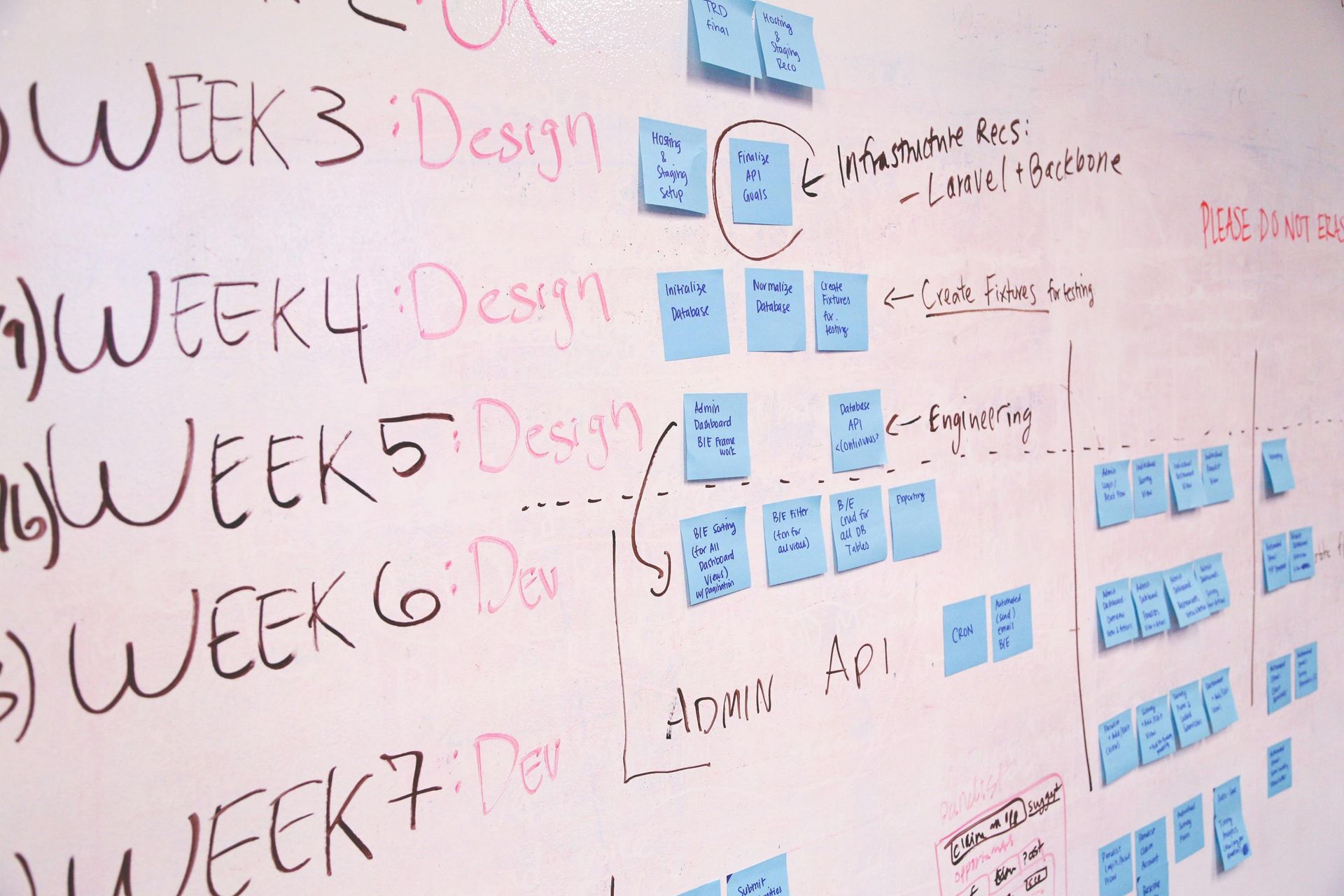
Working with RISE, we intentionally slowed things down. Instead of racing to post whatever hit the inbox, we created a system:

  • A story submission form staff can use (with approvals built in).
  • A shared workflow for story development.
  • A structure for turning one classroom moment into multiple content pieces.
  • And most importantly: A place to put the stories so they don’t disappear into the feed.

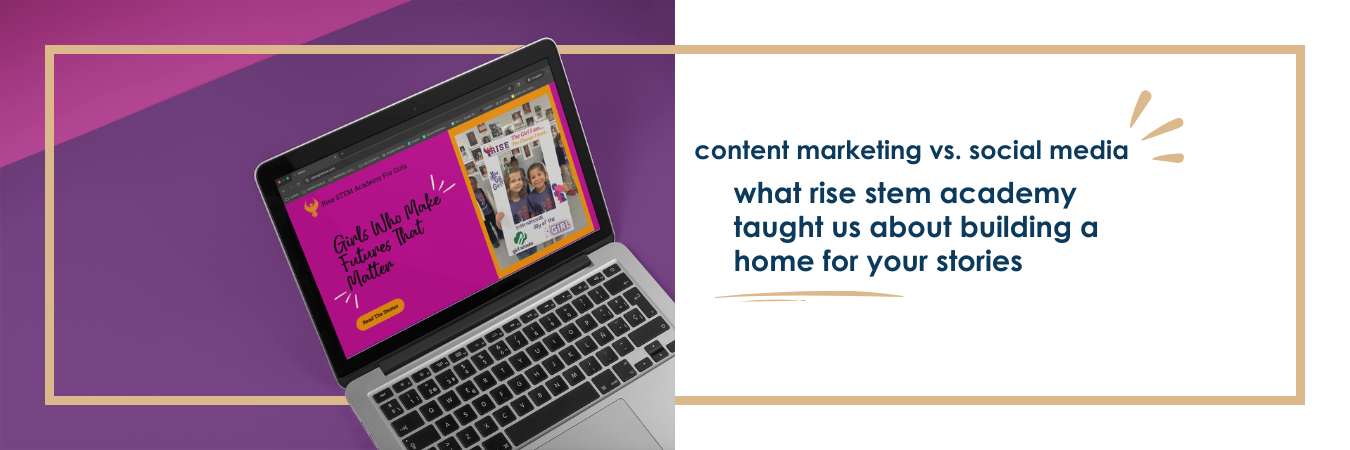
That’s where the micro-site came in: a place to house fuller stories, anchor pieces, student voices, enrollment messaging, and eventually, their Portrait-aligned storytelling.


Suddenly, the story wasn’t being rented to the algorithm.


It was owned by the school.


why owned stories matter (especially during uncertainty)


When RISE’s leadership faced tough district-level decisions this fall — uncertainty about facilities, program structure, grade levels, all of it — something powerful happened:


Their community showed up for them.


Because their story had been showing up for months.


Every post, every spotlight, every story submission… it all added up to public recognition and family support when they needed it most.


And that’s the difference between content that fills a timeline and content that builds trust.


Owned content becomes the proof of who you are and not just the announcement of what you do.


content is the story you build.

social is one way you share it.


When districts treat these two like the same thing, they burn out teams, flatten their stories, and lose the chance to build something lasting.


But when they separate the two — like RISE is doing — they create a sustainable ecosystem:


  • Stories that can be revisited
  • Pages that can be linked
  • Evidence that can be shown
  • Enrollment campaigns that build, not reset
  • A public narrative that compounds rather than disappears

Because the truth is simple:


Your stories deserve a home and not just a timeline.


Want support building a story system your community can return to and not just scroll past?


Let’s talk about what sustainable storytelling could look like.


share:

we're just getting started. explore our other blogs.

By Brooke Goff June 22, 2026
What happens when your culture lives only in people's heads? The three school communications systems every organization needs but rarely builds.
By Brooke Goff June 12, 2026
Most leadership programs produce certificates. Kentucky Leadership Rising is producing superintendents. Here's what genuine pipeline investment actually looks like.
By Brooke Goff May 26, 2026
Clark County built student voice infrastructure while most districts wait for buy-in. Here are the three moves that made it structural, not performative.
By Brooke Goff May 26, 2026
Districts are building accountability systems with fragmented teams. Here's what happens when communications directors aren't at the table from day one.
By Brooke Goff May 26, 2026
HB 257 gives districts funding for dashboards. Most are skipping six foundational questions that determine whether those dashboards will actually work.
By Brooke Goff May 26, 2026
Carroll County spent three years building identity, strategy, and story infrastructure before launching their dashboard. Here's why that order matters.
By Brooke Goff April 9, 2026
Two amendments were withdrawn because superintendents built community trust before the session. Here's what consistent communication infrastructure actually requires.
By Brooke Goff April 2, 2026
Small Kentucky districts don't have a story problem — they have a systems problem. Here's how ParentSquare's new tagging feature changes local accountability dashboards forever.
Show More