

a toddler, a toy laptop, and the big clarity every team needs


By Kali Ervin December 8, 2025

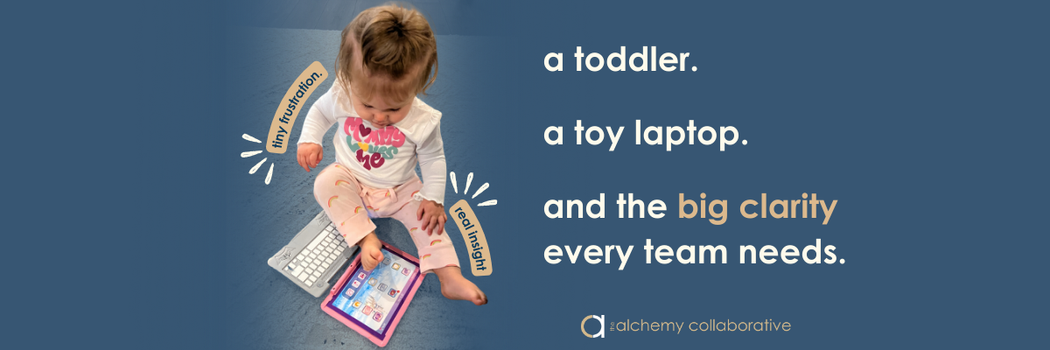
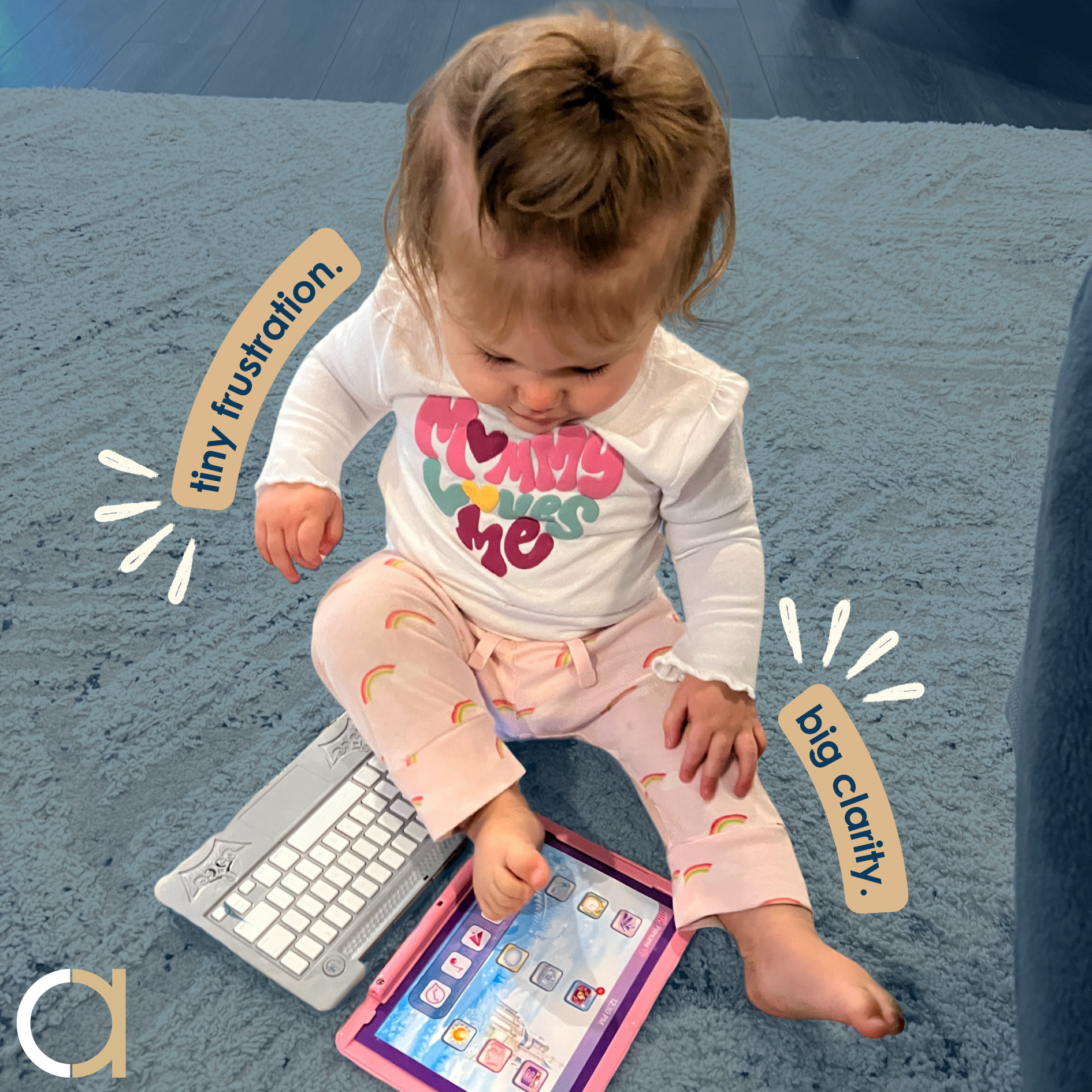
A few mornings ago, my (Kali’s) 13-month-old, Madeline, sat in the middle of the living room with her play laptop, lifted her tiny foot, and popped the entire screen off the keyboard.


I watched her do it slowly, with purpose, as if she had reached her limit with her imaginary inbox.


I had one clear reaction: “Same, girl”. 

when your toddler becomes a meme


I snapped a picture because the moment was just too honest to keep to myself. Her expression was a mix of determination and disbelief. The screen lay next to her on the carpet like a casualty of tiny frustration.


I immediately sent the photo to our our team because I knew they would appreciate the drama of it.


Kristen immediately sent laughing emojis.


Brooke said she genuinely laughed out loud.


Nat and Karri reacted with hearts, which tracks because our entire team adores Madeline almost as much as I do.

There was something about this little moment that felt so familiar. I mean, we’ve all had days where we looked at our laptops like they were the source of every problem we have ever had and are secretly testing us.


We’ve all had moments where the chaos of life meets the chaos of work and our brains quietly whisper, “I would like to detach the screen now.”


what this moment showed me about belonging


What stood out to me was not the joke. It was the joy behind the reactions.


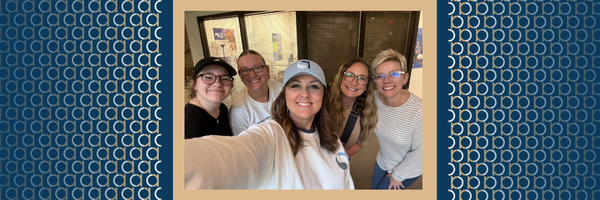
This team doesn’t blink when I send a photo of Madeline in the middle of a workday. They don’t flinch when she babbles during a meeting or when I show up with the tired, honest version of myself. They love her. They love me. They love who we all are together.


There is no pretending here. No need to hide the fact that real life and real work often happen at the same time. No pressure to arrive polished or perfectly composed. Just a group of people who understand that our humanity is not something to manage. It is something to celebrate.


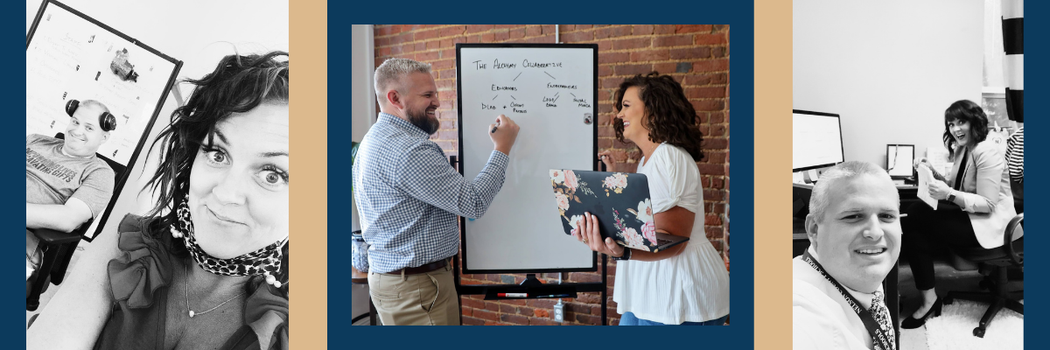
The beauty of this team is how our gifts fit together. The systems people. The writers. The strategists. The visionaries. The ones who bring levity. The ones who hold space. None of us could do this without the others.


Our work clicks into place because we are allowed to be our whole selves, and our whole selves are absolutely, completely, 100% welcome and invited.


When people feel safe and seen, their creativity opens up instead of tightening down.


what this means for the leaders we serve


I keep thinking about how different work feels when people don’t have to hide. The freedom I feel with my team is the same freedom that helps me contribute more generously. It invites me to offer ideas, make connections, bring humor, and show up fully.


District teams are no different.


When staff feel like humans instead of machines, they participate with more heart.


When they feel trusted, they share more ideas.


When they feel included, they step into more ownership.


When they feel safe, they use their authentic voice.


This is where stronger communication grows, not from templates or posts or platforms, but from people who feel supported enough to bring their best, most authentic selves to the table.


If you are leading a team and want your people to contribute more generously, start by shaping the culture around them.


Create space for humanity.

Honor real life.

Celebrate the tiny moments.

Let people show you who they are.


Work improves when people in it feel they belong.


If you want your people to bring their fullest, strongest voices to the work, we can help you build a communication culture where they feel safe, capable, and heard.


When you are ready to create systems that lift people rather than wear them down, we’d love to talk.


read our most recent posts

By Brooke Goff July 21, 2026
Most principals are watching local accountability happen from the hallway. You don't have to wait for an invitation. There is a teacher in a school you probably know. Maybe you have someone like her on your team right now. She runs the PLCs. She sits in on planning sessions across grade levels. She knows which classrooms are doing cross-curricular vibrant learning work this quarter, and she knows which teachers need extra support to pull it off. When something remarkable happens in a student's learning, she finds out. She takes the photos. She writes the caption. She is the reason the school's story gets told at all. And she is one person. When local accountability arrives at your building (and it is arriving) it is going to ask for documented vibrant learning evidence, a Portrait of a Learner that lives somewhere public, data that shows your community what your school actually stands for. And if your answer to any of those requests runs through one person's head, one person's phone camera, one person's memory of what happened in third period on a random Tuesday in October, you have a fragility problem. Not a people problem. A systems problem. And it is fixable, but only if you start now, before the district finishes building the dashboard you will eventually be feeding. Here is what I want principals to know before anything else: you are not behind. You are not failing. The local accountability conversation in Kentucky has been happening almost entirely at the district level, and the assumption buried inside a lot of that work is that principals are naturally in the loop. That superintendents are passing information down. That buildings are ready. Most of them are not. And that is not the principal's fault.  What is within a principal's control right now is whether the work already happening in their building gets captured in a way that will matter later. Not a new initiative. Not a new platform. Not a new committee. Three practices, intentionally done, that most strong principals are already doing accidentally.
By Brooke Goff July 7, 2026
We didn't raise our rates. A client assumed we had. Four systems that explain what changed -- and what AI made possible that wasn't possible before.
By Brooke Goff June 22, 2026
What happens when your culture lives only in people's heads? The three school communications systems every organization needs but rarely builds.
the golden lens

sign up to our newsletter to stay updated!

Contact Us

SHARE THIS

learn how we can help