

let them lead: what carmen coleman teaches us about communication, trust, and the future of schools


By Brooke Goff December 8, 2025

Every so often, someone writes something that feels less like an article and more like a permission slip. That’s what Carmen Coleman’s recent piece in What School Could Be “Let Them…” — offers to educators. It’s a mindset shift that sounds simple, but for many of us working inside or alongside school systems, it hits like a deep exhale.

why “let them…” matters right now


Carmen’s article invites educators to loosen our instinct to control and tighten our instinct to trust.

Let them explore.
Let them try.
Let them get messy.
Let them discover who they are.


It’s a mindset about learning, yes, but also about leadership. And in 2025, when superintendents and communications teams are navigating polarized climates, shifting expectations, and nonstop public scrutiny, “Let Them…” offers something rare: a posture that builds psychological safety, shared ownership, and relational trust.


Because here’s the truth rarely said out loud: you cannot control your way into stronger communication... but you can trust your way into it.


leaders who embody the mindset: a personal note about carmen


I first met Carmen during her time in JCPS, when she was pushing a massive system toward deeper learning by trusting students to show what they could do, not just what they could recall. Later, our team supported her vision for Elevated Studios and helped bring that brand to life during her time at OVEC. Every step of the way, Carmen led with a kind of grounded optimism that made everyone around her braver.


But the moment that captures her leadership best isn’t from a district office...it’s from my daughter’s kitchen counter.


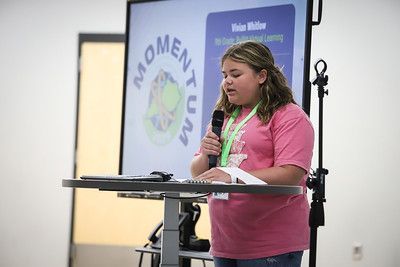
When Vivian started her small macaron business (shout out to Vivian’s Kitchen), Carmen didn’t just buy a box. She encouraged her. She championed her. She invited her to present at conferences. Literally giving a young entrepreneur the microphone in rooms where adults usually hold the floor.

That is “Let Them…” in action.


Let them try. Let them stretch. Let them be taken seriously.


It’s who Carmen is. And it’s why her article resonates far beyond instructional practice. It’s a blueprint for how leadership *especially communication leadership* can look and feel in a healthier system.


the communications angle: what superintendents + comms directors can learn from “let them…”


Communications in a district are often framed as risk management. Tight control. Closed loops. Perfectly polished statements.


But the communities we serve don’t respond to perfection (shocking, right?), they respond to presence.


Here’s how our team believes the “Let Them…” mindset translates into district communications:


let your people speak.


Staff, students, and families are your district’s most credible storytellers. When leaders trust their community to share authentic stories, communications become distributed, not bottlenecked.


let stories emerge organically.


Not everything needs a scripted moment or a staged photo. Some of the most impactful stories come from letting real life show up as it is: imperfect, joyful, human.


let communication be a shared table, not a guarded gate.


Invite more voices into planning, feedback loops, and celebrations. Trust builds when people see themselves reflected in the story being told.


let transparency win.


Perfection distances people. Vulnerability connects them. When districts communicate openly (even in hard moments) communities feel respected, not managed.


Ultimately, Carmen’s message is a reminder that communication is not just what we say...it’s how we lead.


“You cannot control your way into stronger communication, but you can trust your way into it.”


If you’re a superintendent, comms director, or school leader wanting to build a communication system rooted in trust, transparency, and shared storytelling — let’s talk.


This is the work we love, and the work that changes cultures.


read our most recent posts

By Brooke Goff July 21, 2026
Most principals are watching local accountability happen from the hallway. You don't have to wait for an invitation. There is a teacher in a school you probably know. Maybe you have someone like her on your team right now. She runs the PLCs. She sits in on planning sessions across grade levels. She knows which classrooms are doing cross-curricular vibrant learning work this quarter, and she knows which teachers need extra support to pull it off. When something remarkable happens in a student's learning, she finds out. She takes the photos. She writes the caption. She is the reason the school's story gets told at all. And she is one person. When local accountability arrives at your building (and it is arriving) it is going to ask for documented vibrant learning evidence, a Portrait of a Learner that lives somewhere public, data that shows your community what your school actually stands for. And if your answer to any of those requests runs through one person's head, one person's phone camera, one person's memory of what happened in third period on a random Tuesday in October, you have a fragility problem. Not a people problem. A systems problem. And it is fixable, but only if you start now, before the district finishes building the dashboard you will eventually be feeding. Here is what I want principals to know before anything else: you are not behind. You are not failing. The local accountability conversation in Kentucky has been happening almost entirely at the district level, and the assumption buried inside a lot of that work is that principals are naturally in the loop. That superintendents are passing information down. That buildings are ready. Most of them are not. And that is not the principal's fault.  What is within a principal's control right now is whether the work already happening in their building gets captured in a way that will matter later. Not a new initiative. Not a new platform. Not a new committee. Three practices, intentionally done, that most strong principals are already doing accidentally.
By Brooke Goff July 7, 2026
We didn't raise our rates. A client assumed we had. Four systems that explain what changed -- and what AI made possible that wasn't possible before.
By Brooke Goff June 22, 2026
What happens when your culture lives only in people's heads? The three school communications systems every organization needs but rarely builds.
the golden lens

sign up to our newsletter to stay updated!

Contact Us

SHARE THIS

learn how we can help