


why we start the school year in peace and community


By Brooke Goff September 28, 2025

At the beginning of the school year, something powerful happened in our church. Karri asked everyone connected to education to stay for a moment after the service. As people began to gather, the room filled with teachers, bus drivers, cafeteria workers, coaches, custodians, parents, administrators, and students. Before long, it felt like nearly the entire congregation had stayed.


It was more than a headcount. It was a living picture of how deeply education runs through our communities. Every role mattered. Every person carried part of the weight. And together, they represented what it really takes to raise up a generation.


Karri spoke about abundance that morning — the ministry we created to encourage educators and faith-driven leaders. She reminded the church that schools are not sustained by one role or one person. They are held together by communities willing to show up, support, and carry peace into classrooms, buses, cafeterias, and gyms.


That moment was a reminder of why we started abundance.


when logos weren’t enough


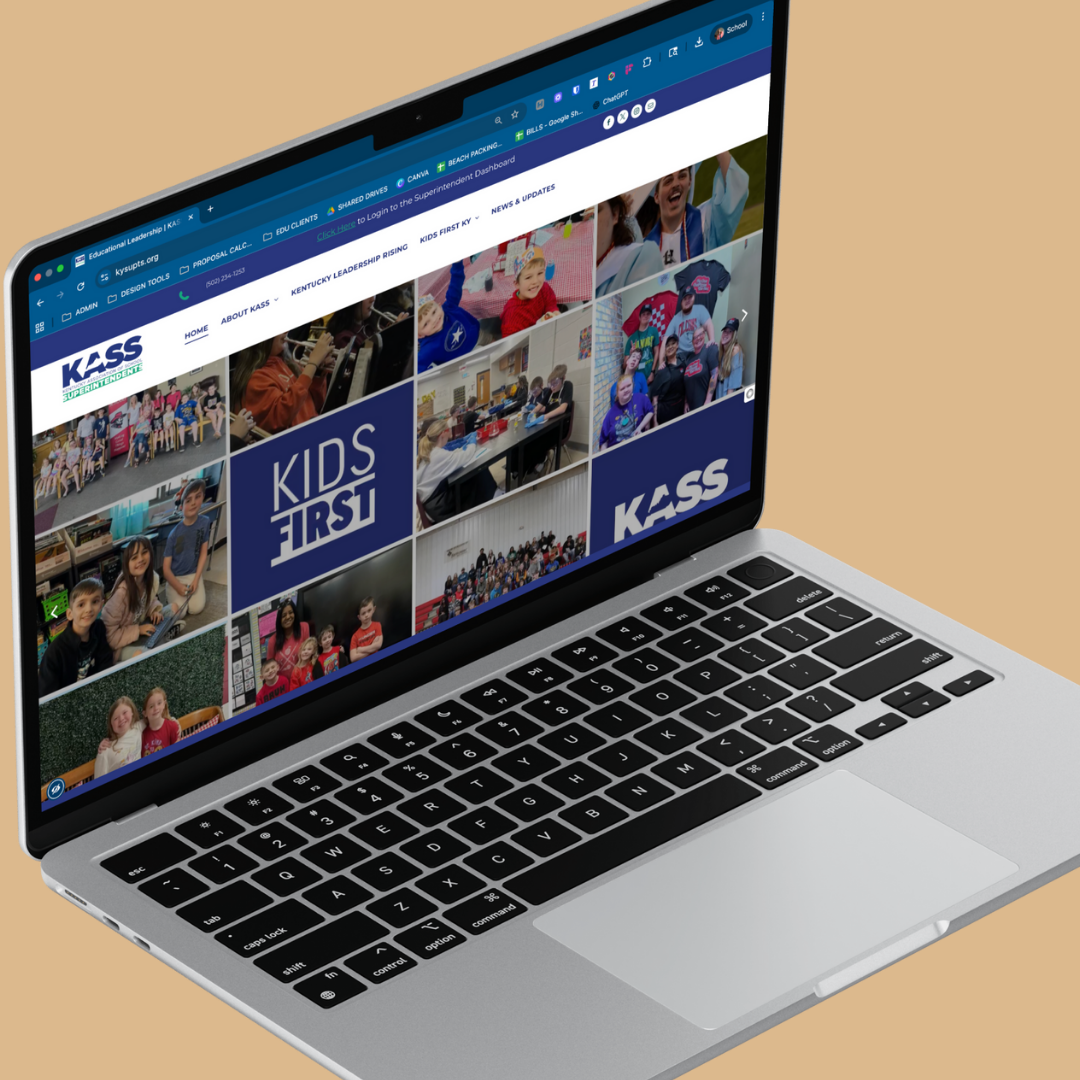
Before abundance came the alchemy collaborative. Our agency began with a clear goal: to help schools and districts strengthen their communication. On the surface, that meant designing logos, creating templates, building websites, and crafting strategic plans. All of those things matter. They help schools look organized, communicate clearly, and build trust with their families.


But I wanted our work to mean more than logos and templates. I wanted it to help educators feel supported, to remind them that their stories matter, and to create systems that could hold people together when the demands of education felt overwhelming.


As we worked alongside superintendents, principals, and teachers, I saw the weight they carried. Long hours, shrinking budgets, teacher shortages, political pressures, and hostile environments that often left them feeling discouraged and alone. The challenges were bigger than any logo or website could fix.


That’s when abundance was born. While alchemy equips school systems with the tools they need, abundance was created to equip the soul of the leader. Where alchemy handles the practical, abundance tends to the heart. And Karri now leads this mission with a calling that is deeply rooted in faith.


the threefold peace of abundance


Abundance exists to remind educators and leaders of one simple truth: peace is possible, even here. Not because circumstances are easy, but because Christ is enough.


We talk about peace in three ways — what we call the threefold peace of abundance:


  • peace in completeness (Jesus): through Christ, we are whole and fully loved. Our worth is not tied to test scores, public opinion, or the weight of endless demands.
  • peace in contentment (the Father): through the Father, we trust His provision. Even when resources are stretched and funding falls short, He remains faithful.
  • peace in community (the Spirit): through the Spirit, we share peace with one another. Education is not the work of one individual. It is sustained when communities carry the load together.


This vision is what Karri spoke over our church family that Sunday. She didn’t just bless the educators for the year ahead. She reminded everyone in the room that they had a role to play in carrying peace into schools.


the why behind the mission


The world is only getting busier. The demands on schools are only growing heavier. Educators are often asked to be more than teachers. They are social workers, counselors, event planners, and crisis responders. And in the middle of all this, many feel unseen, undervalued, and overwhelmed.


Abundance was created for this very moment. We believe the calling of education is holy work, but no one is meant to carry it alone. Our mission is to remind leaders that their identity is not in their performance. It is in Christ. Our role as a community is to speak that truth again and again. To offer encouragement, resources, and reminders that peace is still possible.


That’s why Karri encouraged our church not just to hear the message, but to share it. Share about abundance. Share encouragement with a teacher. Share peace with a leader who feels like giving up. Every time you do, you plant a seed of hope.


what I saw that morning


As I sat in the pews that morning, watching nearly the entire congregation stand, I felt the deep connection between our two callings: alchemy and abundance.


Alchemy was the beginning — the place where I saw the practical needs of schools and wanted to help. But abundance is the outflow — the reminder that beyond communication systems and strategic plans, educators need encouragement, faith, and peace.


Both are part of the same mission: strengthening communities so leaders can thrive.


That morning gave me a fresh picture of why we do this. Education is not carried by one person or one job. It takes all of us. And when we show up together, when we speak peace over our schools, when we lean into Christ for provision, the culture shifts. Schools become places of belonging, not burnout.


an invitation to share


As this new school year unfolds, I want to invite you into the mission. If you are an educator, abundance is here to remind you that you are seen, loved, and not alone. If you are part of a church or community, you have a role to play in carrying peace into schools. And if you know a leader who feels weary, point them toward this space.


Because abundance is not just about one voice. It’s about all of us. It’s about communities choosing to believe that peace is still possible, and then sharing that truth until it takes root.


So let’s start the school year in peace and community. Let’s remind one another that God’s provision is enough. And let’s carry this story together: into classrooms, cafeterias, buses, and boardrooms.


👉 learn more about the mission and how you can share abundance in your community: about abundance.


read our most recent posts

By Brooke Goff July 21, 2026
Most principals are watching local accountability happen from the hallway. You don't have to wait for an invitation. There is a teacher in a school you probably know. Maybe you have someone like her on your team right now. She runs the PLCs. She sits in on planning sessions across grade levels. She knows which classrooms are doing cross-curricular vibrant learning work this quarter, and she knows which teachers need extra support to pull it off. When something remarkable happens in a student's learning, she finds out. She takes the photos. She writes the caption. She is the reason the school's story gets told at all. And she is one person. When local accountability arrives at your building (and it is arriving) it is going to ask for documented vibrant learning evidence, a Portrait of a Learner that lives somewhere public, data that shows your community what your school actually stands for. And if your answer to any of those requests runs through one person's head, one person's phone camera, one person's memory of what happened in third period on a random Tuesday in October, you have a fragility problem. Not a people problem. A systems problem. And it is fixable, but only if you start now, before the district finishes building the dashboard you will eventually be feeding. Here is what I want principals to know before anything else: you are not behind. You are not failing. The local accountability conversation in Kentucky has been happening almost entirely at the district level, and the assumption buried inside a lot of that work is that principals are naturally in the loop. That superintendents are passing information down. That buildings are ready. Most of them are not. And that is not the principal's fault.  What is within a principal's control right now is whether the work already happening in their building gets captured in a way that will matter later. Not a new initiative. Not a new platform. Not a new committee. Three practices, intentionally done, that most strong principals are already doing accidentally.

By Brooke Goff July 7, 2026
We didn't raise our rates. A client assumed we had. Four systems that explain what changed -- and what AI made possible that wasn't possible before.
By Brooke Goff June 22, 2026
What happens when your culture lives only in people's heads? The three school communications systems every organization needs but rarely builds.
the golden lens

sign up to our newsletter to stay updated!

Contact Us

SHARE THIS

learn how we can help