
the building leader's guide to local accountability
By Brooke Goff • July 21, 2026

how to feed the dashboard before it exists
Most principals are watching local accountability happen from the hallway. You don't have to wait for an invitation.
Most principals are watching local accountability happen from the hallway. You don't have to wait for an invitation.
There is a teacher in a school you probably know. Maybe you have someone like her on your team right now.
She runs the PLCs. She sits in on planning sessions across grade levels. She knows which classrooms are doing cross-curricular vibrant learning work this quarter, and she knows which teachers need extra support to pull it off. When something remarkable happens in a student's learning, she finds out. She takes the photos. She writes the caption. She is the reason the school's story gets told at all.
And she is one person.
When local accountability arrives at your building (and it is arriving) it is going to ask for documented vibrant learning evidence, a Portrait of a Learner that lives somewhere public, data that shows your community what your school actually stands for. And if your answer to any of those requests runs through one person's head, one person's phone camera, one person's memory of what happened in third period on a random Tuesday in October, you have a fragility problem.
Not a people problem. A systems problem. And it is fixable, but only if you start now, before the district finishes building the dashboard you will eventually be feeding.
Here is what I want principals to know before anything else: you are not behind. You are not failing. The local accountability conversation in Kentucky has been happening almost entirely at the district level, and the assumption buried inside a lot of that work is that principals are naturally in the loop. That superintendents are passing information down. That buildings are ready.
Most of them are not. And that is not the principal's fault.
What is within a principal's control right now is whether the work already happening in their building gets captured in a way that will matter later. Not a new initiative. Not a new platform. Not a new committee. Three practices, intentionally done, that most strong principals are already doing accidentally.
practice one
capture evidence the same way your students do
Ask a student who has been through a defense of learning what they do to prepare, and they will tell you they gather evidence. Work samples, reflections, projects, moments where they can point to something real and say: here is proof that I am growing. The defense is not the starting line. The evidence is.
Your school needs to do the same thing.
You already see the good stuff. A classroom that felt different when you walked through it. A vibrant learning project that stopped you in the hallway. A student who said something during a presentation that surprised you. You notice it. You might even mention it at a staff meeting. And then it disappears.
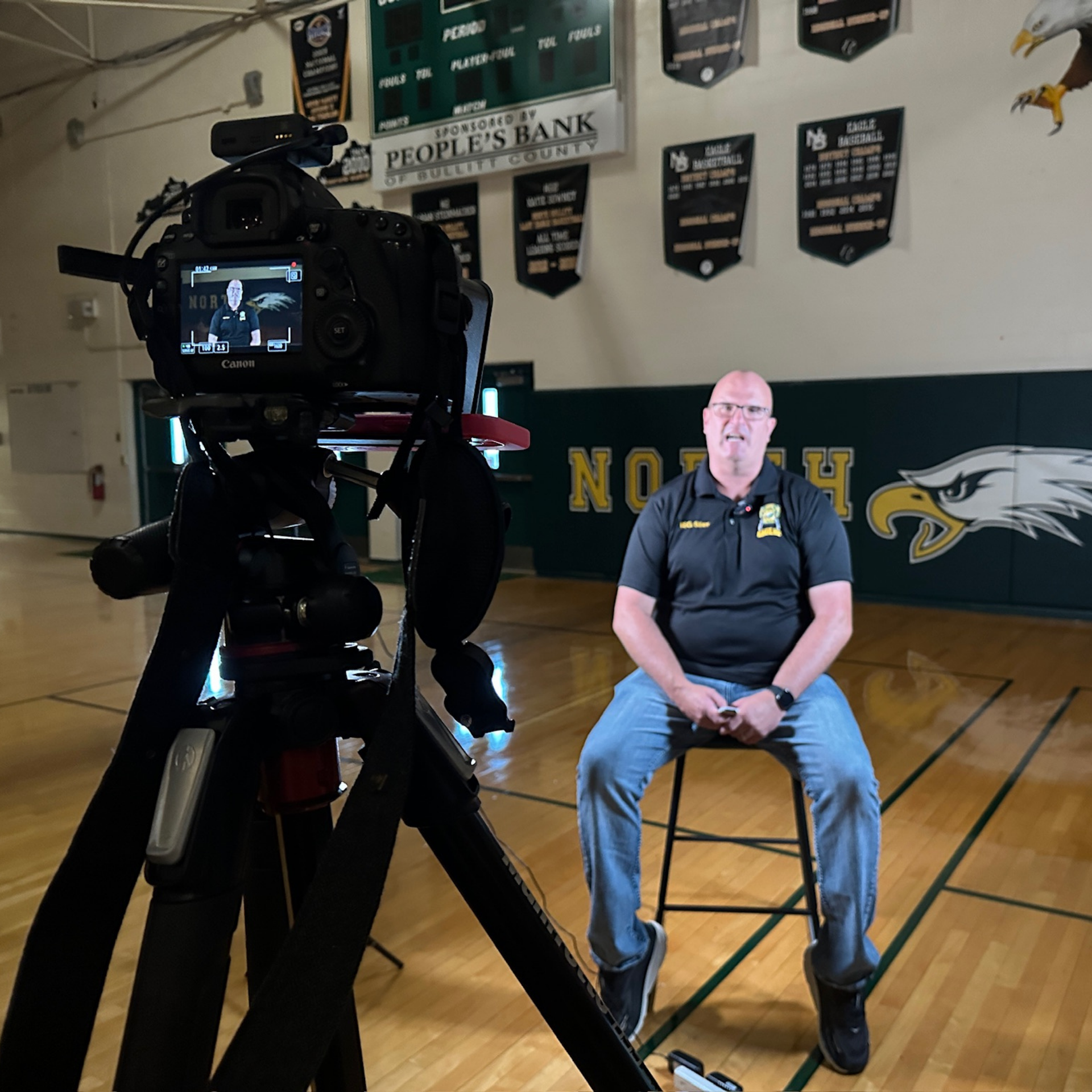
The first practice is to start saving what you already see with the same intentionality you ask students to bring to their own portfolios. One piece of evidence per week, minimum. It does not have to be polished. A photo with two sentences describing what was happening and why it matters. A student work sample tagged to the learning it represents. A short video clip from a defense. A teacher's reflection on what their class built and what it showed.
The format matters less than the habit. What local accountability needs at the building level is not a perfectly curated archive, but rather a consistent capture rhythm, week over week, that builds a real body of evidence over time. If you ask students to document their learning growth, your school should be able to document its own too.
And if you have a staff member like the one I described at the top of this article, her job is not to be the archive. Her job is to help you build the system so the archive outlasts both of you.

practice two
make the portrait of a learner a living conversation, not a framed document
Most schools in Kentucky have a Portrait of a Learner. It describes the qualities and competencies the community decided matter most for students. It was developed with input, approved, and likely printed somewhere near the front office.
And most teachers could not tell you, off the top of their head, how last week's instruction connected to it.
That is not a criticism. It’s what happens when a document lives above the work instead of inside it. The Portrait becomes a planning artifact. It gets mentioned at the start of the year and then quietly recedes until someone needs it for a report.
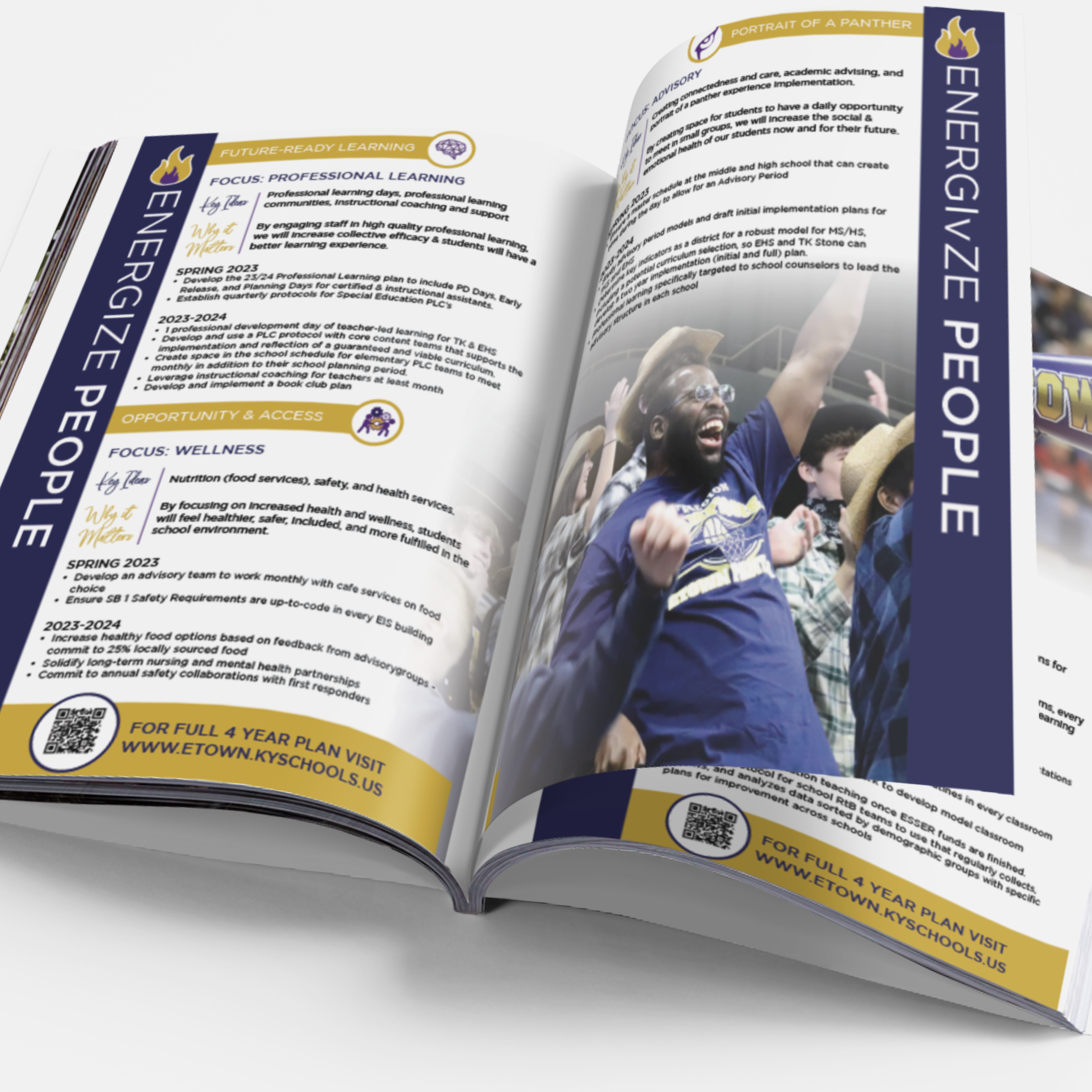
Clark County Public Schools decided to treat their Portrait differently. When they launched it in August 2024, every staff member attended the rollout at Opening Day. Every student received a sticker for their Chromebook. Every classroom got a poster. Over the course of the first semester, more than 115 students and staff were recognized at board meetings, each tied to a specific Portrait competency; not some general shoutout, but a named connection between what someone did and what the Portrait says matters. A local restaurant partnered with the district to give certificates and gift cards to recognized students and staff. The recognition was public, specific, and repeated.
By the time Clark County students presented their learning in Spring Events that April, they had been living in Portrait language for eight months. They were not scrambling to understand what a competency was. They had been talking about it all year.
You do not have to replicate Clark County's rollout to borrow the core idea.
What made it work was repetition and specificity. Not a training, not a one-time launch, but an ongoing habit of naming the Portrait out loud in real moments.
Here are four low-lift ways to make that happen in your building this fall:
- At a staff meeting this fall ask this question: can anyone point to a moment from the last two weeks where a student showed up as the learner this Portrait describes? No preparation required. Just the question.
- Add one Portrait competency prompt to your existing walkthrough form. Not a new evaluation system, but just a note that asks observers to record when they see Portrait-aligned learning in action.
- Ask a teacher team to share one example of Portrait-connected work at a PLC this fall. Not a polished presentation, but a real moment, named out loud.
- At a student assembly or advisory period, show two or three short student work examples and ask students to identify which Portrait competency each one reflects. Let them argue about it.
None of these require a new platform or a new committee. They require a principal who decides the Portrait is a working tool, not a wall display, and who makes space for that to happen consistently.
Read the full Clark County story here.

practice three
organize your evidence by the measures your district is defining
This is the practice that connects your building work directly to accountability, and it is the one most principals are not thinking about yet.
Local accountability frameworks ask districts to document progress across specific pillars and measures: student learning, life readiness, community engagement, safety and well-being, and more. Districts across Kentucky are actively deciding right now which data points map to which measures. Some of those data points are quantitative: attendance rates, benchmark scores, participation numbers. But a significant portion of what these frameworks are designed to capture is qualitative. And that is where building-level evidence lives.
The mistake most schools will make is treating their evidence as a general collection of good things. A folder of photos, a Google Drive of student work, a social media archive of vibrant learning moments. That evidence is valuable. But if it is not organized against the measures your district is defining, it cannot be used to tell the accountability story the framework is asking for.
Start here: find out what pillars and measures your district's accountability framework is built around. If you do not know yet, ask your superintendent or central office contact. Then take a look at the evidence your building is already generating and sort it. Not into subject areas, not into grade levels, but into the accountability measures the district is working toward.
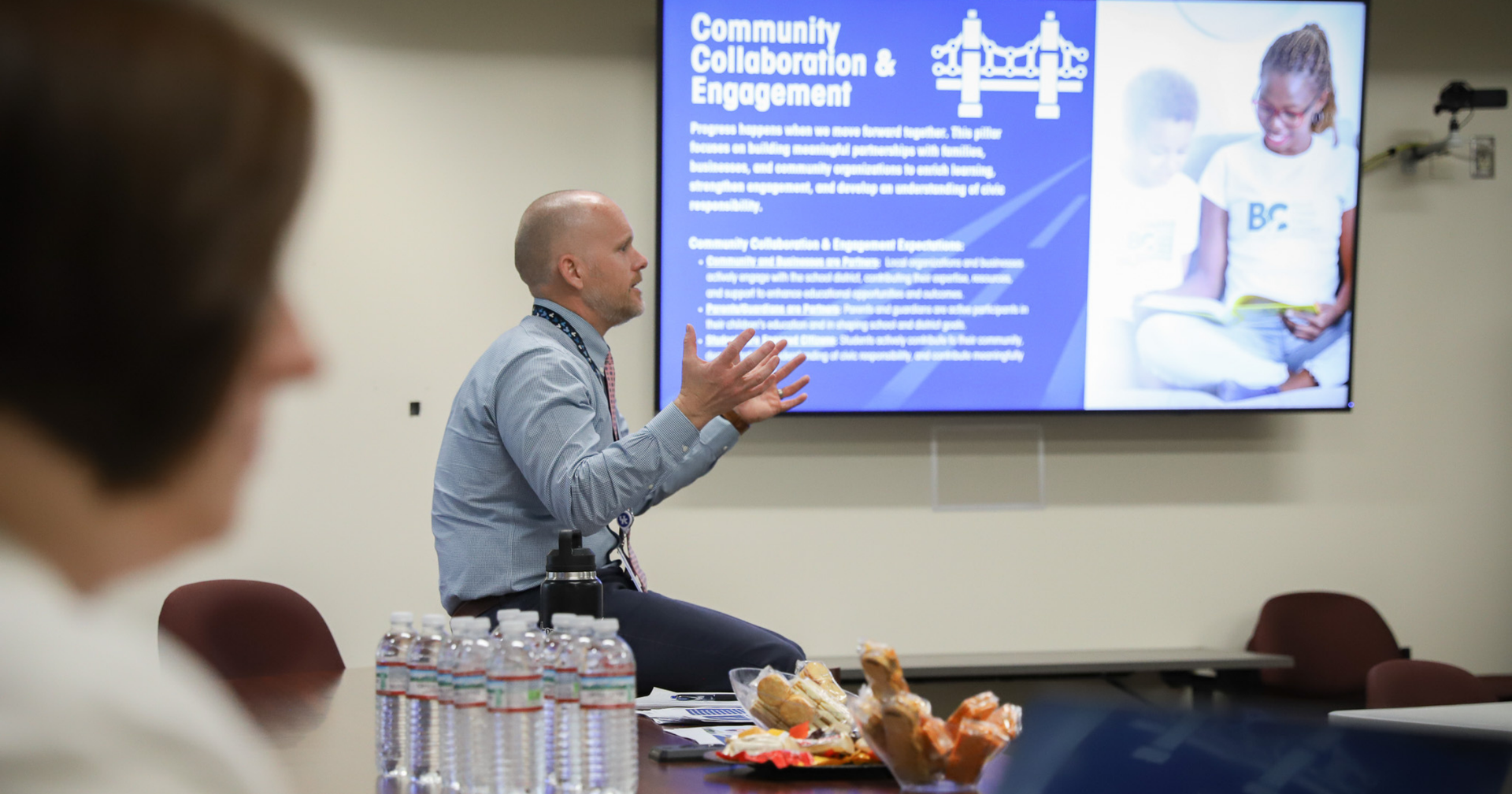
A defense of learning where a student presents to a community panel? That is community collaboration and engagement evidence. A vibrant learning project where sixth graders researched a real local problem and proposed solutions? That is student learning and life readiness evidence. A teacher-designed survey that captures student feedback on their own growth? That is student voice evidence.
When you tag and organize your building's evidence against those measures from the beginning, two things happen. First, you have something real to contribute when the district dashboard goes live. Second, you can show your community a connected picture of what your school is doing; not a scattershot collection of good moments, but a coherent story organized around the outcomes your community said it cares about.
That is what local accountability is designed to produce. Your building can start building toward it now, before the district finishes the infrastructure you will eventually plug into.
There is a broader conversation happening in Kentucky about what local accountability should show communities, and it is a good conversation. But it is happening mostly between district leaders, state agencies, and the organizations supporting this work. Principals are largely watching from the hallway.
That gap is real, and it matters. Because the dashboard a district builds is only as good as the evidence flowing into it from buildings. Evidence does not materialize on demand. It has to be cultivated over time, by the people closest to the learning.
That is you.
You do not need a directive to start. You do not need to wait for the district to finish its framework, or for guidance to be finalized, or for someone to run a training on the platform your school will eventually use.
You need one piece of evidence saved this week, tagged to a measure that matters. One Portrait of a Learner conversation at your next staff meeting once school begins. One honest look at where your building's evidence lives and whether it is organized in a way that can travel.
None of that requires a system to exist first. It just requires a decision that the work your students are doing is worth capturing now, before someone asks you to prove it.
If you want to understand what your district's accountability framework is actually asking for (and whether your building is positioned to feed it), the six foundational questions in Dashboards Decoded are a good place to start.
Download it here, completely free.
And if you want to go deeper on what it looks like when schools build Portrait of a Learner language into the fabric of a building before accountability arrives, these two stories are worth your time:
read our most recent posts
the golden lens
sign up to our newsletter to stay updated!
Contact Us
thanks for signing up!
oops, there was a sign-up error.
please try again later.
SHARE THIS