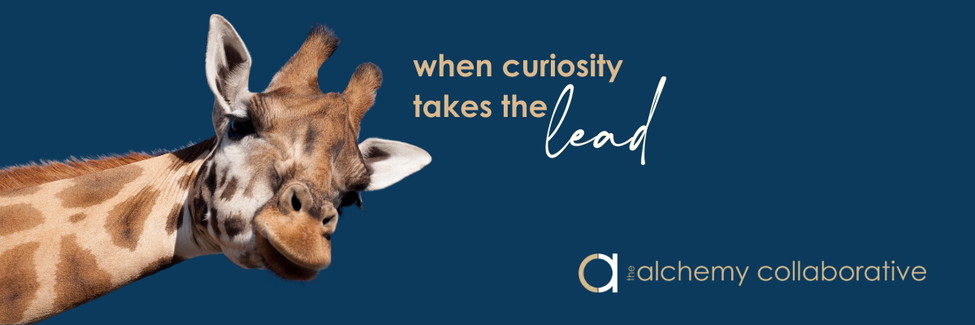

when curiosity takes the lead


By Brooke Goff September 22, 2025


When Karri, one of our team members, joined her music students on a zoo field trip, she expected a fun day outside the classroom. What struck her most, though, was the sound of curiosity.


Students pointed, wondered, compared, and questioned everything they saw. From the stretch of a giraffe’s neck to the rhythm of the elephants’ slow steps, every moment sparked new observations.


Their questions tumbled out: Why does it eat that? How tall is it? Did you see the way it moved?


For Karri, and for us listening to her story, it was a reminder: this is what learning looks like when it’s alive. Not scripted. Not confined to a worksheet. Just genuine wonder leading the way.


the power of transformational learning


Moments like this show us what researchers and educators often call transformational learning. It’s learning that shifts from passive to active, from memorization to meaning. It’s learning that prepares students not only for tests but for life.


The Transformations framework by our friends at elevatED studios captures this shift in four ways:


  • personal: students bring their experiences and interests into the process.
  • learner-led: curiosity and questions drive the journey.
  • real-world: content connects directly to life outside the classroom.
  • collaborative: students build understanding together, not in isolation.


At the zoo, those shifts weren’t theoretical. They were happening all around Karri’s students.


why curiosity matters


It’s tempting to think curiosity is an “extra." Something that is nice to have when there’s time after standards, tests, and schedules. But curiosity is foundational. The Learning Policy Institute notes that inquiry-based, hands-on learning leads to stronger long-term retention and deeper critical thinking skills.


When students follow their curiosity, they deepen their learning in ways that last. They practice problem solving, creativity, and adaptability which are the durable skills that employers, communities, and families depend on.


from content to connection


Karri noticed how students made their own connections. One child compared the elephant’s size to a story their grandparent had told. Another wondered about how animals adapt to survive, sparking thoughts about resilience in their own life.


This is the difference between memorization and transformation. Students weren’t just receiving information. They were interpreting it, linking it, and making it personal. They were proving that when learning is rooted in connection, it becomes unforgettable.


collaboration in action


And it wasn’t quiet. Students huddled, pointed, and debated. They corrected each other. They laughed and sometimes argued. And in that noise, collaboration was happening.


Research from EL Education and High Tech High shows that when students learn collaboratively, they not only grasp content more deeply but also develop essential interpersonal skills. At the zoo, collaboration looked like a group of kids leaning on each other’s observations to build a fuller picture of the world around them.


Schools don’t have to wait for a field trip to create these spaces. They can happen in classrooms through project-based learning, peer critique, or group problem-solving.


ownership changes everything


Perhaps the most striking part of the day was that the learning felt student-owned. There were no predetermined worksheets, no fill-in-the-blank questions. The students decided what mattered. They asked their own questions. They followed their own threads.


That sense of ownership builds independence and confidence. It mirrors the way adults work in the real world: scientists generate hypotheses, engineers test solutions, leaders ask questions no one else is asking. When students own their learning, they begin to see themselves in those roles.


what this means for schools


Whether you lead a public district, a private school, or a rural campus, the lesson is the same: curiosity transforms. And cultivating curiosity isn’t about budgets or system labels. It’s about choices.


Choices like:


  • making room for student questions, not just teacher answers.
  • connecting lessons to the real world, so students see why it matters.
  • valuing collaboration, not just individual performance.


These aren’t small shifts. They’re culture shifts. And they’re the shifts that help students leave school ready to thrive in whatever comes next.


our reflection


Listening to Karri’s story, we were reminded why we do this work at alchemy. We believe schools deserve communication systems, culture supports, and creative tools that help curiosity thrive.


Because when curiosity takes the lead, transformation follows.


And that’s not a public school goal or a private school goal. That’s a human one.


read our most recent posts

By Brooke Goff July 21, 2026
Most principals are watching local accountability happen from the hallway. You don't have to wait for an invitation. There is a teacher in a school you probably know. Maybe you have someone like her on your team right now. She runs the PLCs. She sits in on planning sessions across grade levels. She knows which classrooms are doing cross-curricular vibrant learning work this quarter, and she knows which teachers need extra support to pull it off. When something remarkable happens in a student's learning, she finds out. She takes the photos. She writes the caption. She is the reason the school's story gets told at all. And she is one person. When local accountability arrives at your building (and it is arriving) it is going to ask for documented vibrant learning evidence, a Portrait of a Learner that lives somewhere public, data that shows your community what your school actually stands for. And if your answer to any of those requests runs through one person's head, one person's phone camera, one person's memory of what happened in third period on a random Tuesday in October, you have a fragility problem. Not a people problem. A systems problem. And it is fixable, but only if you start now, before the district finishes building the dashboard you will eventually be feeding. Here is what I want principals to know before anything else: you are not behind. You are not failing. The local accountability conversation in Kentucky has been happening almost entirely at the district level, and the assumption buried inside a lot of that work is that principals are naturally in the loop. That superintendents are passing information down. That buildings are ready. Most of them are not. And that is not the principal's fault.  What is within a principal's control right now is whether the work already happening in their building gets captured in a way that will matter later. Not a new initiative. Not a new platform. Not a new committee. Three practices, intentionally done, that most strong principals are already doing accidentally.
By Brooke Goff July 7, 2026
We didn't raise our rates. A client assumed we had. Four systems that explain what changed -- and what AI made possible that wasn't possible before.
By Brooke Goff June 22, 2026
What happens when your culture lives only in people's heads? The three school communications systems every organization needs but rarely builds.
the golden lens

sign up to our newsletter to stay updated!

Contact Us

SHARE THIS

learn how we can help