
when a system stops working (and what it taught me about unlocking people’s genius)


By Kristen Waits December 2, 2025

If you’ve worked with me (Kristen!) for more than five minutes, you know I love a good system. Clean, logical, efficient — a system that gives you clarity instead of chaos.


But here’s something we talk about a lot at Alchemy: every team has different strengths. And while Brooke is brilliant at big ideas, writing, relationship-building, and saying the one sentence that changes everything… she is not (and she will be the first to tell you this) a natural system-builder.


And that’s okay.


Because she has me.


And she has Kali.


And we are system people to our core.


the week Brooke’s newsletter system revolted


Last week, Brooke’s original newsletter system — the one she lovingly cobbled together months ago — finally tapped out. A process that used to “kind of work” was suddenly taking triple the time, creating friction instead of helping her flow.


And truly, watching Brooke try to describe what was happening inside that old system felt a little like watching someone try to explain a dream. Lots of “well, then I click this… and then sometimes it takes me here… or it doesn’t… I don’t know.”


That was the moment Kali and I stepped in.


We sat down with her, asked all the zoomed-out, 100-foot-view questions she doesn’t naturally ask, and rebuilt the entire thing so it actually matched the way Brooke thinks and works. Not prettier. Not fancier. Just functional, which is all a system needs to be. And if you're reading this blog posts, that means our system worked because she's posting the content.


It reminded me of something we see with districts all the time:


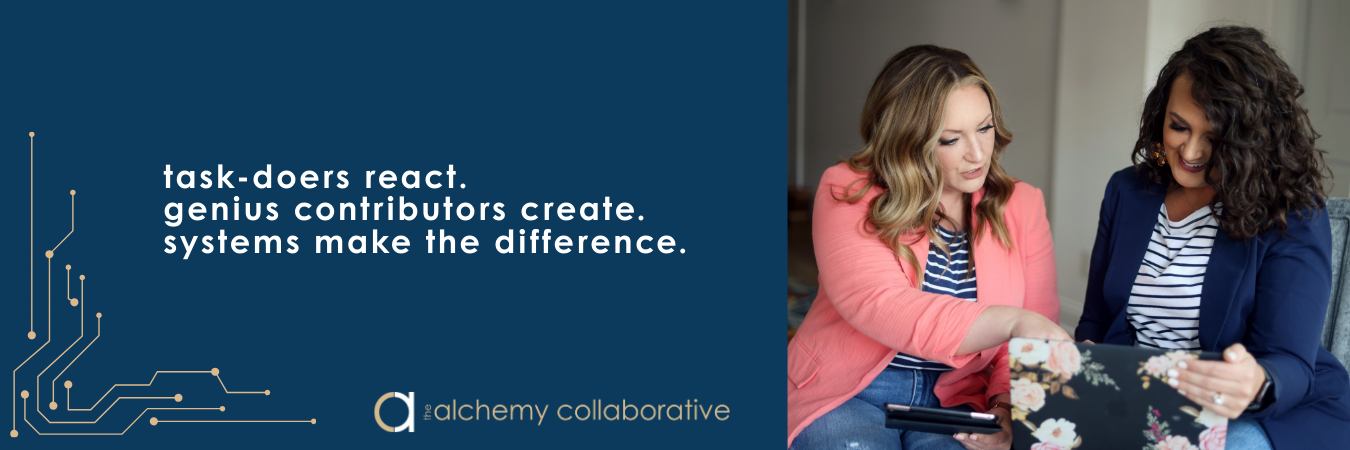
Systems fail not because people are bad at building them, but because they were never designed for how people actually work.


what this showed me about “unlocking genius”


Earlier this month, one of our dearest clients, friends and all around leadership guru, Owens Saylor, said something that’s been sitting with me:


“The major responsibility of the leader is to unlock everybody else’s genius. If they’re just task doers, they won’t care. But when they own it, they share your value for the outcome.”


This is exactly what broken systems prevent.


When a system works against you, you shrink into task-mode.


You stop offering ideas.


You stop improving the process.


You just try to survive it.


But when a system is rebuilt in a way that honors how you think, move, and make decisions?


That’s when your genius comes out.


And honestly, that’s what happened last week: Brooke’s brilliance wasn’t the problem. The system was. Once we redesigned it, she stepped right back into the creative, clear, high-level leader she is.


how this connects to our districts


We see this everywhere:


A social media process that needs eight people and a prayer.


A story submission workflow that collects the wrong info.


A communications “system” that is really just someone remembering texts from principals.


Districts don’t need more task-doers.


They need systems that unlock everyone’s voice and make it easy for staff to share ownership of the mission.


That’s why we build story forms.


That’s why we centralize workflow.


That’s why we ask the annoying-but-necessary questions.


That’s why we rework systems when they stop working...for our clients and for ourselves.


Because the goal isn’t efficiency (although we believe this is the cherry on top).


The goal is unlocking genius.


a system isn’t successful because it looks organized — it’s successful because it unlocks people.


let’s fix the systems that aren’t serving you


If there’s a process in your district that keeps breaking, slowing you down, or making people avoid it, we can help rebuild it — simply, sustainably, and with your people in mind.


let's chat!


read our most recent posts

By Brooke Goff July 21, 2026
Most principals are watching local accountability happen from the hallway. You don't have to wait for an invitation. There is a teacher in a school you probably know. Maybe you have someone like her on your team right now. She runs the PLCs. She sits in on planning sessions across grade levels. She knows which classrooms are doing cross-curricular vibrant learning work this quarter, and she knows which teachers need extra support to pull it off. When something remarkable happens in a student's learning, she finds out. She takes the photos. She writes the caption. She is the reason the school's story gets told at all. And she is one person. When local accountability arrives at your building (and it is arriving) it is going to ask for documented vibrant learning evidence, a Portrait of a Learner that lives somewhere public, data that shows your community what your school actually stands for. And if your answer to any of those requests runs through one person's head, one person's phone camera, one person's memory of what happened in third period on a random Tuesday in October, you have a fragility problem. Not a people problem. A systems problem. And it is fixable, but only if you start now, before the district finishes building the dashboard you will eventually be feeding. Here is what I want principals to know before anything else: you are not behind. You are not failing. The local accountability conversation in Kentucky has been happening almost entirely at the district level, and the assumption buried inside a lot of that work is that principals are naturally in the loop. That superintendents are passing information down. That buildings are ready. Most of them are not. And that is not the principal's fault.  What is within a principal's control right now is whether the work already happening in their building gets captured in a way that will matter later. Not a new initiative. Not a new platform. Not a new committee. Three practices, intentionally done, that most strong principals are already doing accidentally.
By Brooke Goff July 7, 2026
We didn't raise our rates. A client assumed we had. Four systems that explain what changed -- and what AI made possible that wasn't possible before.
By Brooke Goff June 22, 2026
What happens when your culture lives only in people's heads? The three school communications systems every organization needs but rarely builds.
the golden lens

sign up to our newsletter to stay updated!

Contact Us

SHARE THIS

learn how we can help