

why a simple digital presence builds trust with school districts


By Brooke Goff August 25, 2025

Organizations that serve school districts: associations, service centers, nonprofits, professional networks, often underestimate how much their digital presence shapes trust. School leaders are some of the busiest people out there. If they land on your website and can’t find what they need in under a minute, they’re already frustrated. The truth? A confusing digital presence doesn’t just annoy people; it erodes credibility.


In this post, we’ll look at common pitfalls education-facing organizations make online and how a simpler, clearer approach builds confidence and connection with school leaders.


is your site trying to do too much?

Many organizations load their homepage with everything they offer: conferences, member benefits, policy updates, events, job boards, resource libraries. While all of that content is valuable, piling it up in one place makes it harder (not easier) for someone to get what they came for.


Takeaway: decide what matters most and make those pathways obvious. “Join now,” “find training,” and “get support” should never be buried three clicks deep.


are you organizing for your org... or for your audience?

It’s tempting to build your site structure around internal departments: membership, advocacy, professional learning, communications. but users don’t think that way. A superintendent looking for legal support doesn’t care which department offers it... they just need a clear path to help.


takeaway: label navigation by user intent, not internal org charts. Make it easy for leaders to say, “That’s me, and that’s what I need.”


are your words clear or coded for insiders?

Education organizations love a good acronym or program name. But if someone outside your inner circle doesn’t immediately know what it means, you’ve lost them. “Developing leader network” might sound good internally, but what it really means to a visitor is “connect with mentors.”


takeaway: use plain, human-centered language. clarity wins every time.


how we’ve seen it work better

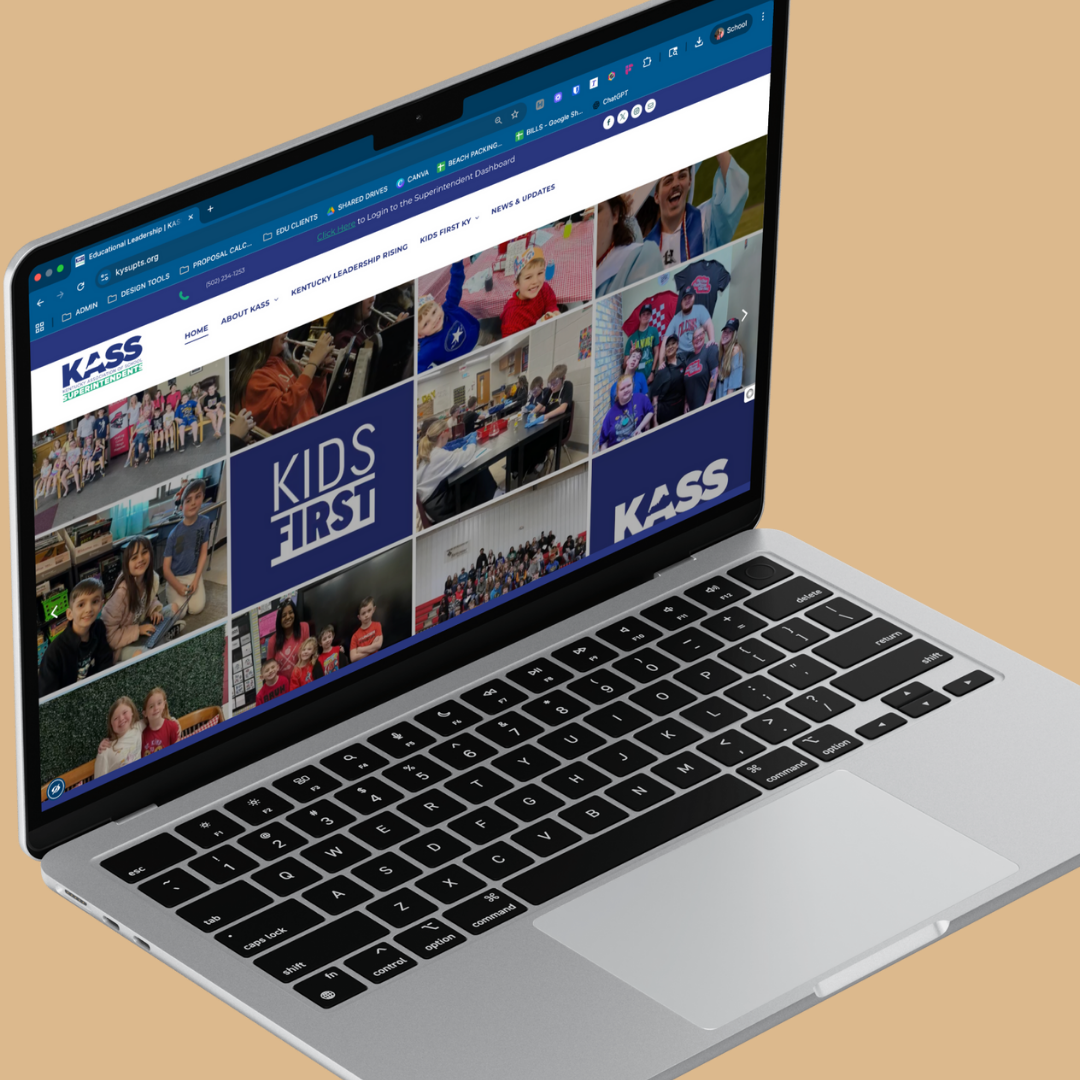
When we helped relaunch the Kentucky Association of School Superintendents  (KASS) site, our focus was simple: make the essential things findable and fast. Instead of overwhelming visitors with everything at once, we prioritized clear categories, consistent calls to action, and short summaries that explain what a program actually does.


the result? a site that serves leaders first rather than an org’s internal structure.


ready to simplify your digital presence?

Your website doesn’t need to be flashy to be effective. It needs to be clear, trustworthy, and built for the people you serve.


If you want to make sure school leaders can find what they need in under 30 seconds, we’d love to help you get there.


👉 book a consult with our team


 📚 Explore the whole case study

read our most recent posts

By Brooke Goff July 21, 2026
Most principals are watching local accountability happen from the hallway. You don't have to wait for an invitation. There is a teacher in a school you probably know. Maybe you have someone like her on your team right now. She runs the PLCs. She sits in on planning sessions across grade levels. She knows which classrooms are doing cross-curricular vibrant learning work this quarter, and she knows which teachers need extra support to pull it off. When something remarkable happens in a student's learning, she finds out. She takes the photos. She writes the caption. She is the reason the school's story gets told at all. And she is one person. When local accountability arrives at your building (and it is arriving) it is going to ask for documented vibrant learning evidence, a Portrait of a Learner that lives somewhere public, data that shows your community what your school actually stands for. And if your answer to any of those requests runs through one person's head, one person's phone camera, one person's memory of what happened in third period on a random Tuesday in October, you have a fragility problem. Not a people problem. A systems problem. And it is fixable, but only if you start now, before the district finishes building the dashboard you will eventually be feeding. Here is what I want principals to know before anything else: you are not behind. You are not failing. The local accountability conversation in Kentucky has been happening almost entirely at the district level, and the assumption buried inside a lot of that work is that principals are naturally in the loop. That superintendents are passing information down. That buildings are ready. Most of them are not. And that is not the principal's fault.  What is within a principal's control right now is whether the work already happening in their building gets captured in a way that will matter later. Not a new initiative. Not a new platform. Not a new committee. Three practices, intentionally done, that most strong principals are already doing accidentally.

By Brooke Goff July 7, 2026
We didn't raise our rates. A client assumed we had. Four systems that explain what changed -- and what AI made possible that wasn't possible before.

By Brooke Goff June 22, 2026
What happens when your culture lives only in people's heads? The three school communications systems every organization needs but rarely builds.
the golden lens

sign up to our newsletter to stay updated!

Contact Us

SHARE THIS

learn how we can help