
what makes a local accountability example worth studying?
By Brooke Goff • October 26, 2026
how to tell which examples actually fit your district
The easiest example to find is rarely the one your district needs.
A few weeks ago I was at a training with one of my favorite colleagues. She's one of the biggest champions of vibrant learning I know, the kind that actually changes school for kids. We got to talking about accountability, and I said the word "dashboard." I watched her face change. You could almost see the spreadsheet forming in her head: test scores, percentages, little colored arrows.
She didn’t need to say anything for me to know we were using one word for two different things.
For me, a dashboard is where a community gets to see what's changing for kids. It’s the look inside the school. The student presentation. The internship that came out of a business partnership. The story behind the number.
For a lot of people, it's the report card in a nicer font. And honestly, that's fair. It's what most of us have been shown.
Around the same time, I heard about a leadership team whose portrait of a learner had stalled. They did exactly what we tell people to do. They reached out to a district further along and asked to learn. From what I heard, they walked out more overwhelmed than when they walked in. The other district did nothing wrong when they shared years of finished work, and the visiting team had no way to tell which piece fit where they were standing.
Two different moments, same gap. Kentucky has more examples to learn from than ever. What we don't have is a shared way to read them.
And the examples keep coming.
HB 257 wrote local accountability into law this spring and funded it. KDE has had
district leaders walking through their local accountability dashboards in its Lunch and Learn series, and its
How It's Working in Districts page collects district spotlights from across the state. That's good news. More shared work means fewer districts starting from scratch.
But finding the right example is still harder than it should be. Back in August, a chief academic officer asked a group of us a simple question: is there a list of districts doing this work, with examples we could see or people we could call? I went looking. Nobody could tell me who had a dashboard or where it lived. One evening Nat and I went digging ourselves and found a Kentucky district's portrait of a learner buried inside a national article.
When good work is that scattered, leaders learn from the example they can find instead of the one that fits. Usually, that's the most polished link.
Kentucky already has a shared map for this work. KDE's
Local Accountability Design Guide and Toolkit follows the Local Accountability Continuum, developed by the University of Kentucky Center for Next Generation Leadership. It walks districts through the phases, from defining success with their community to building a system that shows it.
What we're missing is a habit for reading the examples that sit on that map. Some people would rather keep every showcase wide open and let leaders decide for themselves. I understand the instinct. Nobody wants to be the one deciding whose work counts. But a list where everything counts doesn't help the superintendent who has one afternoon to figure out what to try next.
If every district is an exemplar, none of them is.
The answer isn't a ranking. It's four questions any district leader can apply to any example, including ours.
what changed for kids?
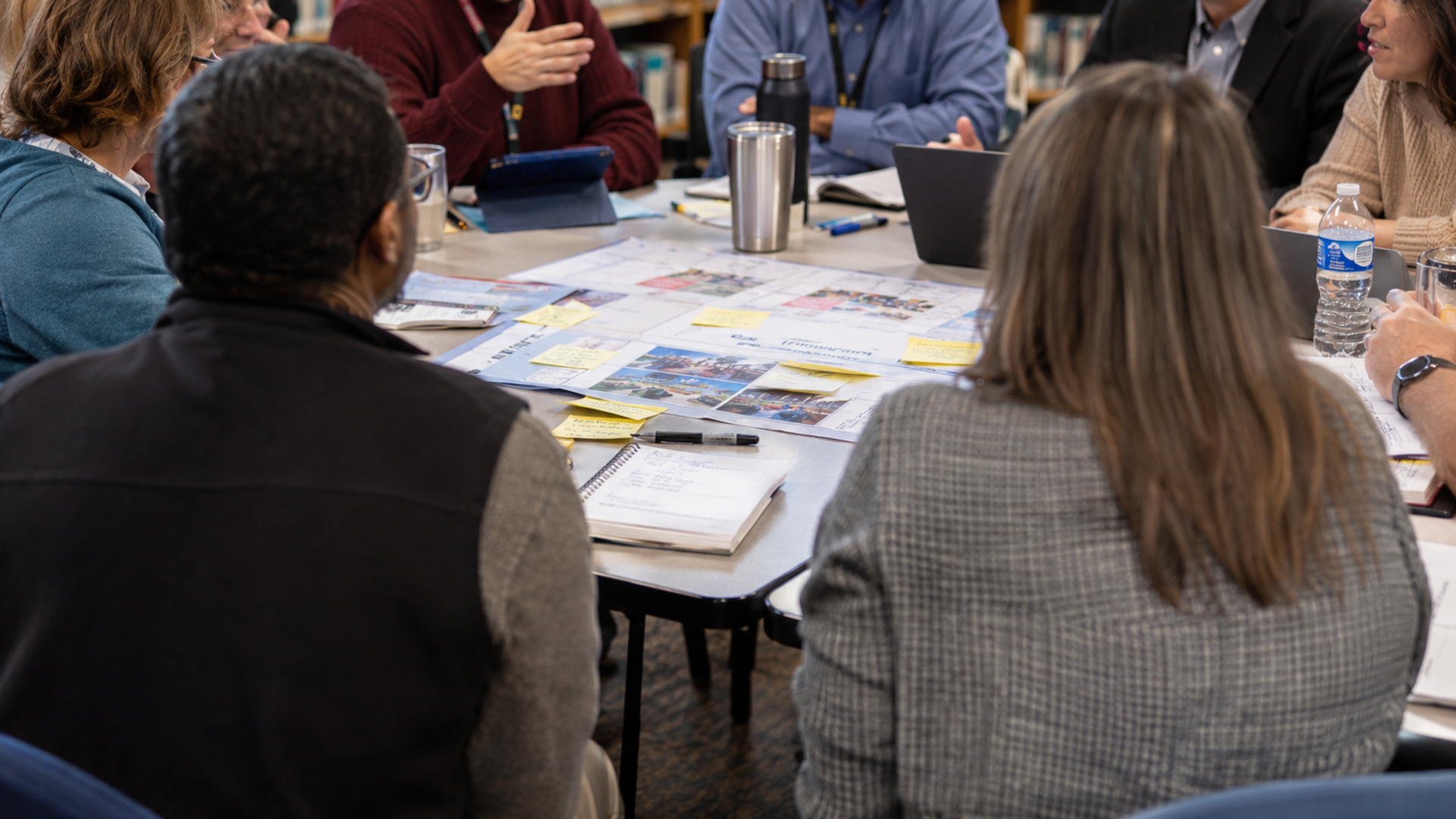
Start with students. Before you notice the design or the data source, ask what is different for kids because this work happened. Think of it like a house listing. A great photo tells you the kitchen has nice counters. It can't tell you whether the family actually cooks there.
KDE is already modeling this kind of reading. In an update to the Kentucky Board of Education, it highlighted districts for specific strengths: Russell County for defining success, Hardin County for vibrant learning, Bracken County for performance assessment, and Grant County for district success. Nobody was held up as finished. Each district was held up for the piece other districts could learn from.
So when you open an example, name the one thing it changed for kids. If you can't name it after five minutes, keep looking.
what shows it beyond the numbers?
Numbers matter, and academic achievement belongs in every local accountability system. But it's one indicator among several, and every district had its test scores long before it started this work.
A lot of what gets passed around as an exemplar dashboard is the school report card wearing a different mask. Same scores, new colors. If that's truly what a community asked for, fine. There's just no transformation in it for the rest of us to learn from.
Look for the other kinds of evidence. Student work and presentations of learning. A teacher's story. A family's words. Durable skills like collaboration or communication that someone actually took the time to measure.
The strongest examples mix numbers with narrative so a community can see the learning behind the score.
Here's a quick test: if you removed every chart, what would be left? If the answer is nothing, you're looking at a data display. It might be useful, but it probably isn't the example you need.
who helped build it?
Local accountability is supposed to be built with a community. Students, families, teachers, local employers, the board. The best examples can tell you who shaped them and how.
A dashboard built by one person at central office can look exactly like one built with fifty voices. The difference shows up a year later, when the community recognizes itself in the work and keeps showing up to help improve it.
Look for signs of that process: an advisory council, community conversations, students helping design the measures. If an example doesn't say who helped build it, ask the district. Most leaders love telling that part of the story, and it's usually where the real lessons live.
what would it take in our community?
This is the question that would have saved that leadership team from their overwhelming visit. Every example sits somewhere on the continuum. Before you study one, figure out which phase it comes from and which phase you're in.
That team was shown the finish line while they were still lacing up their shoes. They didn't need a full system. They needed a district that had just gotten its own portrait of a learner off the ground a year earlier.
Then ask the practical questions. How much staff time did this take? What tools does it run on, and who keeps it updated?
An example built on resources you'll never have is more postcard than model.
Before you reach out to a neighbor, jot down your phase and theirs. Then go in with one specific question, like "How did you get families to your first community conversation?" You'll get a better answer, and you'll hang up with a next step instead of a headache.

where to start
Kentucky districts are sharing more of their work than ever, and that's worth celebrating. These four questions won't tell you which district is best. They'll help you find the example that fits where you are right now, and they'll make that next call to a neighbor a lot more useful.
So the next time someone sends you a link and says, "You have to see what they're doing," open it with these questions beside you. What changed for kids? What shows it beyond the numbers? Who helped build it? What would it take here?
read our most recent posts


the golden lens
sign up to our newsletter to stay updated!
Contact Us
thanks for signing up!
oops, there was a sign-up error.
please try again later.
SHARE THIS