



you have to be an active member of your own message: what we learned about workflow (and why communications people aren't at the table)
By Brooke Goff • May 26, 2026

six years ago, i watched a
TED talk that stopped me mid-scroll.
The speaker opened with footage of a flock of birds: thousands of them moving in perfect synchrony across the sky. No leader. No lag. Just fluid, instant coordination.
The explanation: these birds aren't following one leader. That would be too slow. Instead, they're aligned on a few simple rules that let every single bird make autonomous decisions while still flying together. Their alignment enables their autonomy.
I understood it intellectually. I nodded along. I thought, "Yeah, that makes sense."
Then I filed it away and went back to work.
It wasn't until recently (six years later) that I actually saw it in action.
As CEO and strategic director of Alchemy, I'd spent years feeling responsible for every part of every project. Kali felt the same. Kristen felt the same. We were all staying in our lanes, but the lanes didn't connect. Projects were disconnected. Siloed. Bottlenecks everywhere.
We'd start something, hand it off halfway, realize it wasn't scoped clearly, circle back, clarify, restart. Tension built up in the gaps. People were working hard, but we were working around each other, not with each other.
Then we hit a wall with a client project, and something had to change.
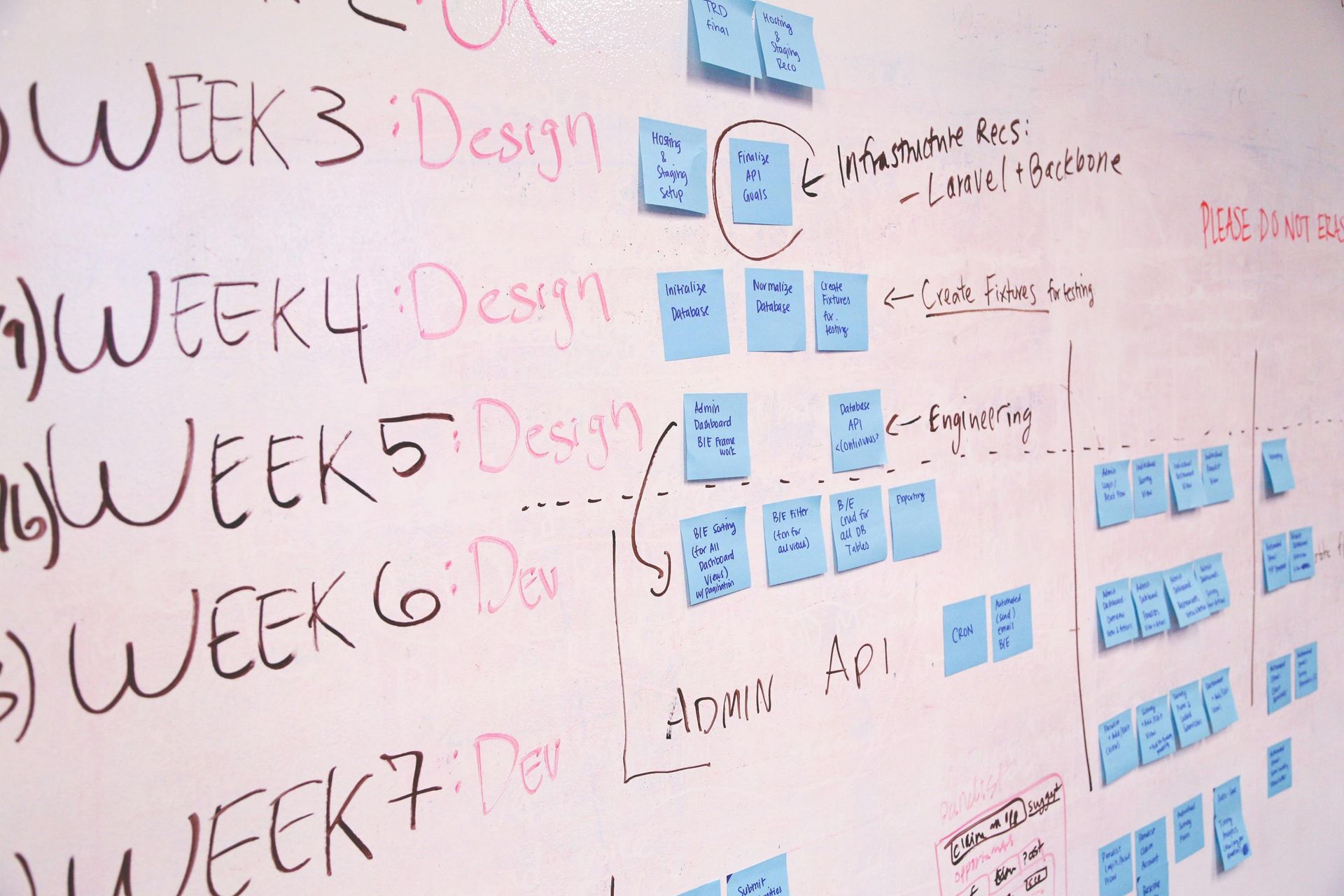
So we rebuilt the workflow. Not with a massive reorganization. Not with new roles or titles. Just with clearer handoffs and complete alignment before anyone started executing.
The new rhythm: I ideate. Kristen filters it into an actionable scope. Kali executes only when it's fully scoped. No one starts until the person before them is done. Complete handoffs. No gaps.
That's when the TED talk moved from my head to my gut.
We weren't following one leader anymore. We were aligned on the rules, and that alignment freed us to move fast. The bottlenecks disappeared. The tension dropped. The work got better.
I finally understood what the speaker meant: their alignment enables their autonomy.
That breakthrough happened over several weeks.
Then I started seeing the same pattern everywhere in our district work.
Communications directors living in silos. Brought in at the end to "make it look good." Completely disconnected from the accountability teams building dashboards and portraits of learners.
I kept bringing it up. In client meetings. In conversations with my new friends at UK Next Gen. At the OVEC board presentation in April.
And every time I brought it up, I got the same reaction: Oh. Yeah. That's exactly what's happening.
One district we know has some of the best storytellers in the state: world-class social media, decades of student journalism legacy, a communications director who understands narrative at a level most districts never reach. She'd been part of the local accountability work from the beginning, which is exactly why their storytelling around it was so strong.
But when they were ready to move into the next phase (building the public-facing dashboard), I asked how involved the communications director was with the website, their primary communication platform.
The answer? Not at all.
The person who'd been at the table for the narrative work wasn't at the table for the infrastructure work. And the infrastructure is what makes the narrative sustainable.
Another district was featured at a statewide convening as an exemplar in local accountability. The dashboard looked polished to external audiences. But inside? The superintendent was disengaged during the presentation. The execution was static. And the external validation arrived before the work was actually ready to hold up under scrutiny.
A third district (one of the strongest I've seen in this work) has a superintendent who's all-in on local accountability. He's building systems. He's iterating. He's thinking long-term. But when you talk to him about his communications director, he's dismissive. He's not at the table. He's not part of the design. He's just expected to distribute whatever gets handed to him.
The accountability team and the communications team weren't aligned, so neither could be autonomous.
Districts are doing exactly what we were doing. Everyone's flying solo in the same sky.
The question the TED talk speaker asked still stands: What are you willing to give up to change the way you work?
For Alchemy, the answer was control. I had to give up owning every strategic decision. Kristen had to give up starting work before scope was clear. Kali had to give up executing on incomplete handoffs.
For districts, the answer is the same.
Superintendents have to give up the idea that accountability work can happen in one department and communication work can happen in another.
Communications directors have to give up waiting to be invited and start asking for a seat at the table from day one. And accountability teams have to give up the assumption that "making it look good" is something you tack on at the end.
Because when communications directors aren't part of the design from the beginning, three costly consequences show up every single time.

consequence 1: accountability work stays invisible
ou can build the strongest local accountability system in the state. You can co-create a portrait of a learner with 120 community stakeholders. You can design competency rubrics that make learning visible across K-12. You can train teachers. You can launch it district-wide.
And families will never see it.
Not because the work isn't good. But because there's no distribution infrastructure baked into the design.
Here's what happens: the accountability team builds the dashboard on a platform they chose because it was easy or free or recommended by another district. The communications director finds out about it three weeks before launch when someone forwards her a link and says, "Can you promote this?"
She opens the link. The platform is unfamiliar. The dashboard is on a separate website from the district's main site. There's no tagging system to automatically connect the dashboard content to the stories she's already telling on social media or in the monthly newsletter. No integration with the tools families already use.
So she does what she can. She writes a Facebook post. She sends an email. She puts a link on the homepage.
And then the work disappears.
Because distribution isn't something you add at the end. It's something you design from the beginning.
When communications directors are part of the design team, they ask different questions. Where will families actually look for this? How does this connect to the stories we're already telling? What platform are we already using that families trust? How do we tag content so it surfaces when parents are searching for their child's classroom?
Those aren't "make it look good" questions. Those are infrastructure questions.
And if they're not answered during the design phase, the accountability work stays invisible no matter how strong it is.

consequence 2: leadership bottlenecks
When communications directors aren't at the table, someone else has to do their job.
Usually, that someone is the superintendent or the chief academic officer.
They become the bridge between the accountability work and the public-facing communication. Every update has to flow through them. Every message has to be written by them or heavily edited by them. Every decision about what gets shared, when, and how bottlenecks at the top.
And here's the problem: superintendents and CAOs already have full jobs.
So one of three things happens.
Option one: the work slows down. Updates that should go out monthly go out quarterly. Dashboards that should be refreshed regularly sit static for months. The communication can't move faster than the superintendent's calendar allows.
Option two: the quality drops. Because the superintendent doesn't have time to write every message, things get delegated without clear direction. Principals write their own updates. Teachers post their own content. The messaging becomes inconsistent. Families get different information depending on which school their child attends.
Option three: the work stalls entirely. The accountability system gets built, but it never gets communicated. It sits in the background. Families don't know it exists. Teachers aren't sure how to talk about it. And the whole initiative loses momentum because no one outside the design team knows what's happening.
Bottlenecking at the top isn't a capacity problem. It's a design problem.
When communications directors are part of the design team, they can own the distribution strategy. They can build the messaging calendar. They can create templates for principals. They can write the updates, coordinate the posts, and keep the communication moving without waiting for the superintendent to free up time.
The superintendent still leads. But the work doesn't stop when the superintendent is busy.
That's what alignment enables. Not just autonomy for the communications director, but autonomy for the whole system.

consequence 3: sustainability collapses when people leave
One person owns it. That person leaves. The work dies.
We've seen this happen over and over.
A district builds a beautiful, narrative-driven accountability dashboard. It's hosted on a separate website. It's filled with videos and student stories and rich media. The communications director loves it. She updates it regularly. She promotes it. Families engage with it.
Then she takes a job in another district.
And six months later, the dashboard is still live, but nothing's been updated. The most recent student story is from last spring. The video links are broken. The data hasn't been refreshed.
Because the person who knew how to update it is gone. And no one else knows how.
This isn't a training problem. It's a design problem.
When you build accountability infrastructure on a platform only one person knows how to use, you build fragility into the system. When the communications director is the only person who understands the story architecture, the narrative collapses when she leaves.
Sustainable systems are built on platforms multiple people can access and tools multiple people understand. They're built with redundancy and documentation and handoff protocols baked in from the beginning.
When communications directors are part of the design team, they ask: Who else needs to be able to update this? What happens when I'm on vacation? What happens when I leave? How do we build this so it doesn't fall apart when someone new steps into this role?
Those questions don't get asked when communications directors are brought in at the end. Because by then, the platform's been chosen. The structure's been set. And the fragility is already locked in.
alignment enables autonomy
Six years ago, I watched footage of birds flying in perfect synchrony and thought I understood it.
I didn't. Not really.
Because understanding alignment intellectually is different from building it practically.
It wasn't until we rebuilt Alchemy's workflow (complete handoffs, clear ownership, no one starting until the person before them was done) that I saw what the TED talk speaker meant. Their alignment enables their autonomy.
And it wasn't until I started working with districts on local accountability that I saw what happens when alignment is missing.
Accountability teams building dashboards without communications directors at the table. Communications directors brought in at the end to promote work they didn't help design. Superintendents bottlenecked in the middle, trying to connect work that was never built to connect.
Everyone flying solo in the same sky.
The question the speaker asked still matters: What are you willing to give up to change the way you work?
For superintendents, it means giving up the idea that teams can live in s. It means inviting communications directors into the design conversation from day one, not just the distribution conversation at the end.
For communications directors, it means giving up waiting for the invitation. It means asking for a seat at the table when the accountability work is being scoped, not after the platform's been chosen and the structure's been set.
For accountability teams, it means giving up the assumption that "making it visible" is something you tack on at the end. It means building distribution infrastructure into the design from the beginning.
Those trade-offs aren't easy. But they're necessary.
Because when communications directors are part of the design, three things change:
The accountability work becomes visible.
Leadership stops bottlenecking.
And the system can sustain itself when people leave.
That's what alignment enables.
Over the next few months, we'll be working with leaders across the state to bring communications directors and accountability leaders together in the same room to start building that alignment.
If you're a superintendent thinking, "Yeah, we need this," or a communications director thinking, "Finally, someone said it," stay tuned. We're building something specifically for this.
In the meantime, here's the question worth asking in your district this week:
Who's not at the table right now that should be?
Not because they need to be informed. But because the work won't hold without them.
read our most recent posts
the golden lens
sign up to our newsletter to stay updated!
Contact Us
thanks for signing up!
oops, there was a sign-up error.
please try again later.
SHARE THIS