
you have to be an active member of your own message
By Brooke Goff • May 26, 2026

does your district value student voice, or does it actually have it? clark county knows the difference.

Most districts say they value student voice. Clark County Public Schools decided to prove it. In August 2024, they launched their Portrait of a Learner with stickers on every Chromebook, posters in every classroom, and a plan to give students something most districts only talk about: a real chance to own their learning story.
By spring, students across all grade levels had presented their learning to authentic audiences. This wasn't a pilot. This was infrastructure.
But here's what most people don't know: Clark County has been building toward this moment for decades.
Shanda Crosby spent 20 years teaching Smoke Signals, the student-run news program at George Rogers Clark High School. She revived a dormant newspaper with no computers and a handful of students, and over two decades, built a legacy of student storytelling that shaped how Clark County thinks about student voice. In August 2025, she transitioned to become the district's full-time District and Community Relations Coordinator, a role she'd held part-time for years. The same principle that drove Smoke Signals, giving students a platform to discover their voice, now influences how the district approaches student agency at scale.
The difference between "we value student voice" and "students actually have voice" isn't permission or buy-in. It's intentional design. Clark County didn't wait for the perfect moment or the perfect team. They planted the idea in fall, protected planning time in winter, and gave every school the structure to design Spring Events that fit their students and community. By April 2026, students were presenting their learning tied to Portrait of a Learner competencies, and the system made space for it to happen.
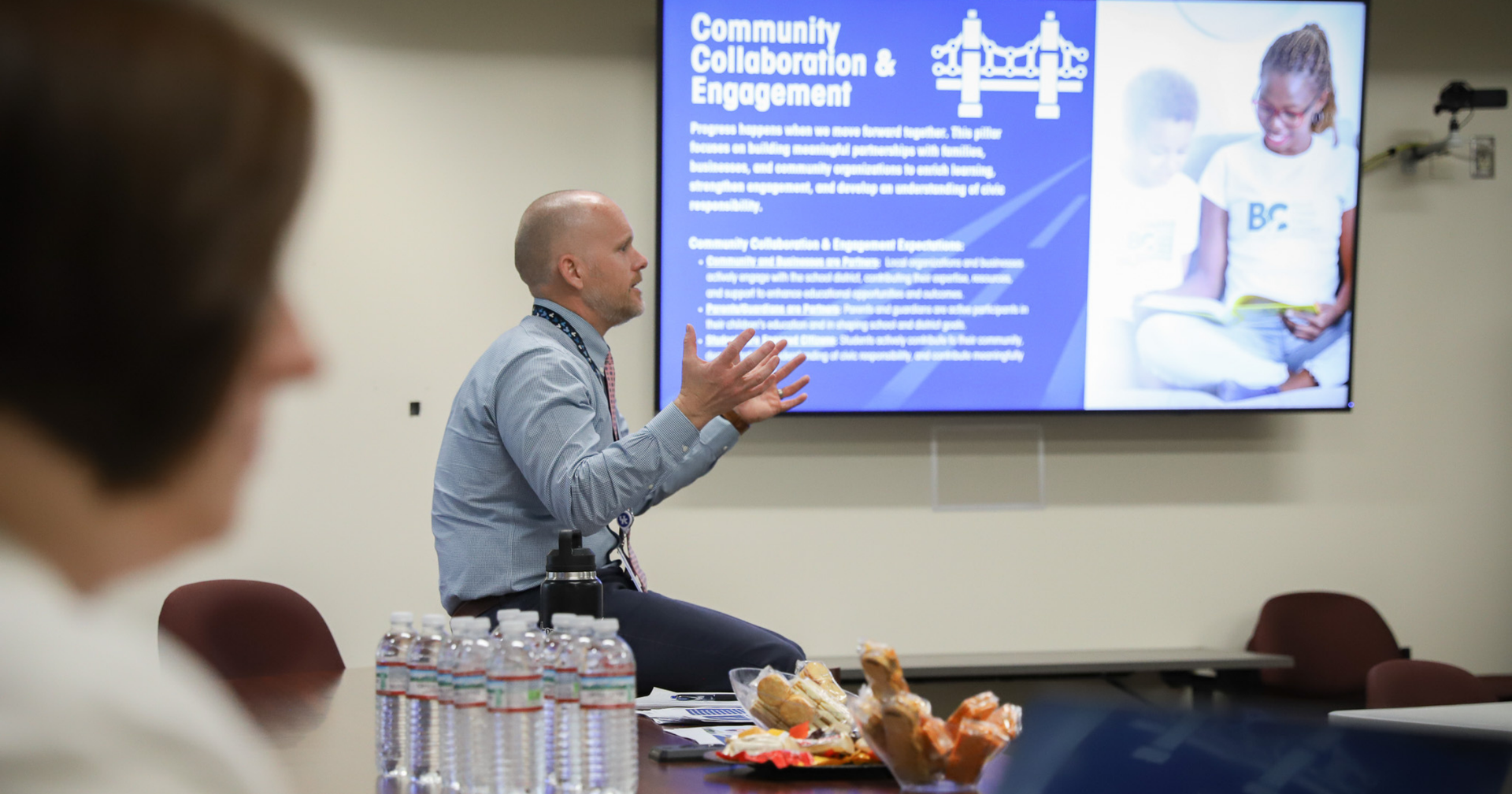
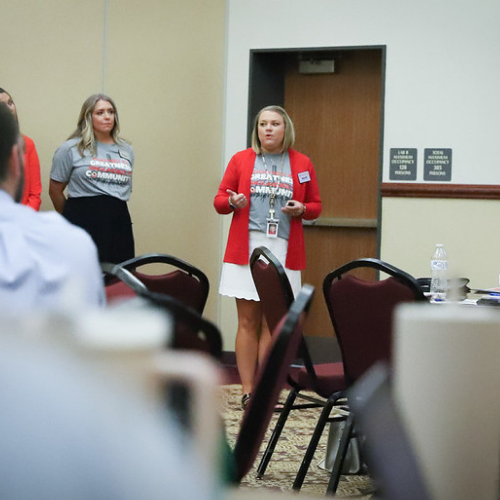
When Kelly Fithen, Chief Academic Officer, and her team presented their Spring Events work at the UK Next Gen Leadership Academy showcase, they shared three moves that turned student voice from aspiration into infrastructure.
Here's what they did, and how your district can adapt it.
move 1: seed early, protect time

Clark County didn't announce Spring Events in March and expect schools to execute in April. They planted the idea in fall 2024 during administrator meetings. Principals took one question back to their leadership teams: What opportunities can we give students to talk about their learning and reflect on the competencies?
No mandate. No deadline. Just a question.
Then they protected time. On January 5, 2026, a teacher workday, the district gave school teams dedicated planning time to design their Spring Events. They provided a Portrait Package with guidance, slides, and supporting materials. Teams created action steps. They sketched out event designs. They identified what they needed to make it work.
Two weeks later, administrators gathered again; this time for a 30-minute collaborative conversation. No formal presentations. No performance pressure. Just: Here's what we're planning. What do you think? Susan Dugle and Julie Moore from UK Next Gen sat in as thought partners. Schools asked clarifying questions, received feedback, sparked new ideas, and refined their thinking.
By the time Spring Events happened in March and April, schools had been living with the concept for six months. That's not rush work. That's infrastructure.
What this means for your district: Student voice doesn't happen because you announce it. It happens because you give teams time to think, plan, and refine before you ask them to execute.
If you want Spring Events next year, start the conversation now. Protect a planning day in January. Build in a refinement checkpoint before launch. The timeline matters as much as the idea.
move 2: structure with flexibility
Clark County didn't script Spring Events. They set expectations and let schools design.
The expectation: every school hosts a Spring Event where students share their learning and reflect on Portrait of a Learner competencies. The format? That's up to you.
Some schools embedded Spring Events into existing structures; for example, Title I Nights became showcases. Others created stand-alone student-led conferences. Some scheduled events during the school day. Others hosted evening celebrations. Schools designed for their students, their families, and their community.
The variety wasn't chaos. It was intentional. The district built the frame (students will present, competencies will be named, authentic audiences will be present) and schools filled it in.
This is what happens when structure and autonomy work together. Students didn't experience seven different initiatives across seven different schools. They experienced one district-wide expectation with seven locally-designed expressions.
What this means for your district: Give schools the structure (what and when), then step back on the how. You're not looking for perfect uniformity. You're looking for shared commitment expressed in contextually-appropriate ways.
The best Spring Event for an elementary school won't look like the best Spring Event for a high school, and that's the point.
move 3: make it visible

Before students presented anything, Clark County made sure they knew what they were presenting about.
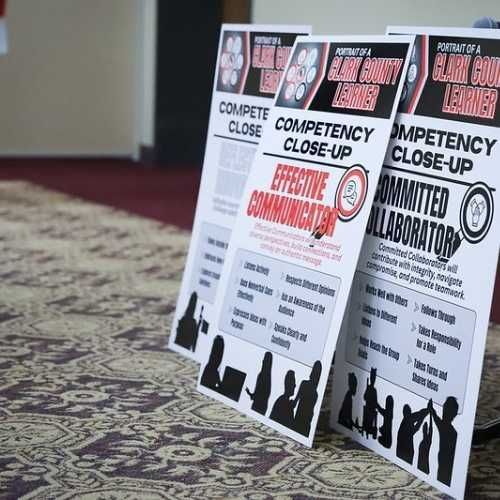
In August 2024, every staff member attended the Portrait of a Learner launch at Opening Day. Every student received a sticker for their Chromebook. Every classroom got a poster. Every school building got signage. Over 115 people (students and staff) were recognized at board meetings during the first semester, each one tied to a Portrait competency.
The district also created Portrait Packages: six full packages and three review packages distributed across all schools. Each one included activities connected to the competencies and videos created by the district's Student Production Team. Students didn't just hear about the Portrait of a Learner. They saw it, touched it, talked about it, and watched their peers explain it.
By the time Spring Events arrived, students weren't scrambling to figure out what a "competency" was. They'd been living with the language for months. The Portrait wasn't new. Presenting about it was.
And here's the piece that often gets missed: Clark County paired visibility with recognition. Board meetings celebrated students and staff demonstrating competencies. Hall's on the River, a local restaurant, partnered with the district to distribute certificates and $20 coupons to 125 students and 95 staff members. Recognition wasn't abstract. It was public, specific, and tied to something students could see themselves in.
What this means for your district: You can't ask students to present on something they've only heard about once. Visibility precedes voice. If you want students to talk about your Portrait of a Learner, make sure they see it everywhere they look, and make sure they've watched other students talk about it first.
Peer models matter more than posters, but you need both.
student voice needs planning, not permission
Student voice doesn't become structural by accident. It becomes structural when districts make three intentional moves: they plant early and protect time, they build structure with flexibility, and they make the work visible before asking students to own it.
Clark County didn't wait for perfect conditions. They started the conversation in fall, gave schools the winter to plan, and built refinement into the calendar. They set district-wide expectations and let schools design locally. They put Portrait of a Learner language everywhere students looked, and then asked students to talk about it.
The result wasn't a showcase of what one innovative school could do. It was proof of what happens when student voice is treated as infrastructure, not inspiration.
If you're thinking about how to make student voice structural in your district (not performative, not optional, but expected) the moves Clark County made are a place to start.
Seed early.
Protect time.
Build structure with flexibility.
Make it visible first.
Student voice doesn't need permission. It needs planning.
What's one move you could make this week to shift student voice from aspiration to infrastructure in your district?
read our most recent posts
the golden lens
sign up to our newsletter to stay updated!
Contact Us
thanks for signing up!
oops, there was a sign-up error.
please try again later.
SHARE THIS