

honoring service, shaping stories: veterans day in our schools


By Brooke Goff November 12, 2025

when gratitude becomes the story

Every November, we see something remarkable unfold across the schools and districts we serve. Gymnasiums fill with flags and families. Students stand at attention beside their grandparents. Teachers quietly guide children through songs they’ve practiced for weeks.

Veterans Day is a day that carries both weight and warmth. And for school communicators, it’s one of those rare moments when the purpose of the work feels crystal clear. The goal isn’t just coverage. It’s care.


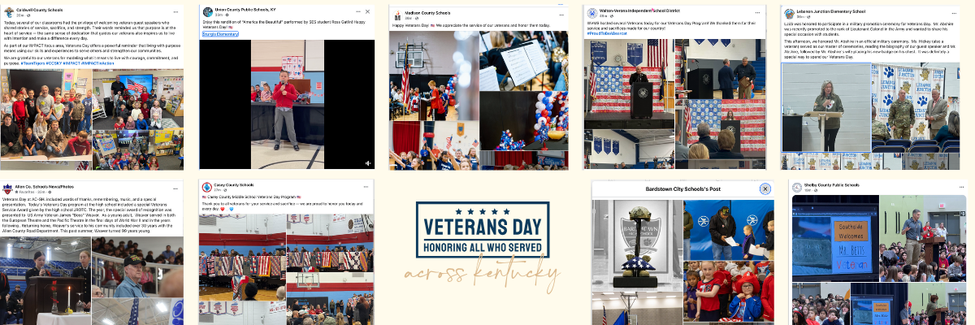
As we scroll through posts from partner districts, one thing stands out again and again: these stories are told differently. The captions are more intentional. The photos carry a sense of reverence. The videos linger a few seconds longer. Every detail reflects the kind of storytelling that happens
when people know the story matters.


the heart behind the highlights


It’s easy to think of Veterans Day as an “event”: one more thing to plan, post, or promote. But in reality, it reveals the very heart of what makes school communication meaningful.


When a student introduces a veteran with trembling hands, when a choir sings the anthem slightly off key, when a district shares a photo of a folded flag or a handwritten thank-you card... those moments remind us what communication is really for.


It’s not about perfection. It’s about connection.


The best Veterans Day posts don’t just show who was there; they help communities feel something. They invite people to pause, to remember, to honor. They remind us that storytelling is a public trust.


And for the teams who spend all year communicating on behalf of schools, these days are a quiet affirmation that the work matters.


what we noticed this year

Across districts, we saw the same thread of care running through very different kinds of stories.

In one district, elementary students filled their gym with handmade signs and sang to a room full of local veterans: simple, sincere, and unforgettable. In another, a high school journalism team interviewed alumni who served, creating a digital archive of stories that will live far beyond this week. Shout out to our partners in Butler County Schools for a full blown parade! And in several districts, social media teams wove together photos, quotes, and video clips that carried both honor and heart.


Each of these examples had one thing in common: intentional storytelling.


You could feel that care in the composition of every photo: the flag framed just so, the smile of a veteran who felt seen. You could hear it in the captions: words that were brief but meaningful, often written in the language of gratitude instead of announcement.


It takes time to tell stories like that. It takes empathy, coordination, and often a few late nights in Canva or CapCut. But it’s the kind of work that holds communities together.


why this day matters for communicators


Veterans Day gives us a glimpse of what happens when communication begins with values instead of logistics. It’s a day when every piece of content is filtered through respect and not simply reach.


That’s what makes it a “great day for school comms,” as one of our team members said this week. Not because it trends, but because it reminds us what thoughtful storytelling looks like in practice.


There’s an authenticity to these stories that can get lost in the daily rhythm of updates, deadlines, and deliverables. But on Veterans Day, every caption, photo, and post becomes part of something sacred: a collective act of remembrance and gratitude that transcends branding or metrics.


This is what we mean when we talk about communication as culture-shaping. It’s not just about what a district says; it’s about what a community feels.


servant leadership in action


For us at Alchemy, these moments also echo the values that guide our work: servant leadership, reliable overseeing, bountiful harvesting, and vision planting.


Veterans Day embodies all four.


  • Servant leadership shows up in the teachers and students who give their time to honor others.
  • Reliable overseeing comes through the careful planning of communication teams who steward stories with integrity.
  • Bountiful harvesting is seen in the abundance of gratitude that fills the comments and halls alike.
  • And vision planting reminds us that telling these stories well shapes how future generations understand service, sacrifice, and community.

That’s the beauty of this day. It connects history to hope.


storytelling as service


If we had to name one theme that threads through every Veterans Day post we’ve seen, it’s this: storytelling can be a form of service.

When school communicators capture these moments with dignity and care, they’re practicing remembrance. They’re helping whole communities honor what’s good and true.


In an era where so much online communication feels rushed or reactive, this kind of storytelling feels like an act of quiet resistance. It’s slow, intentional, and deeply human.


And it’s the kind of work that makes us proud to serve the people who serve schools.


“Storytelling can be service, too. When we tell these stories well, we help communities remember what matters most.”


to every school communicator who helped tell today’s stories: thank you. Your care, creativity, and commitment help communities see the heart of education in action.


read our most recent posts

By Brooke Goff July 21, 2026
Most principals are watching local accountability happen from the hallway. You don't have to wait for an invitation. There is a teacher in a school you probably know. Maybe you have someone like her on your team right now. She runs the PLCs. She sits in on planning sessions across grade levels. She knows which classrooms are doing cross-curricular vibrant learning work this quarter, and she knows which teachers need extra support to pull it off. When something remarkable happens in a student's learning, she finds out. She takes the photos. She writes the caption. She is the reason the school's story gets told at all. And she is one person. When local accountability arrives at your building (and it is arriving) it is going to ask for documented vibrant learning evidence, a Portrait of a Learner that lives somewhere public, data that shows your community what your school actually stands for. And if your answer to any of those requests runs through one person's head, one person's phone camera, one person's memory of what happened in third period on a random Tuesday in October, you have a fragility problem. Not a people problem. A systems problem. And it is fixable, but only if you start now, before the district finishes building the dashboard you will eventually be feeding. Here is what I want principals to know before anything else: you are not behind. You are not failing. The local accountability conversation in Kentucky has been happening almost entirely at the district level, and the assumption buried inside a lot of that work is that principals are naturally in the loop. That superintendents are passing information down. That buildings are ready. Most of them are not. And that is not the principal's fault.  What is within a principal's control right now is whether the work already happening in their building gets captured in a way that will matter later. Not a new initiative. Not a new platform. Not a new committee. Three practices, intentionally done, that most strong principals are already doing accidentally.
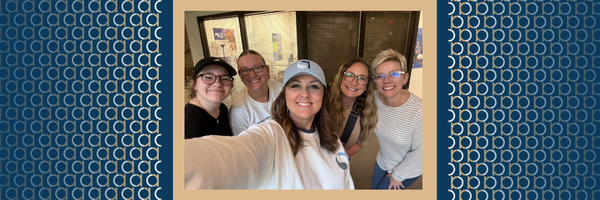
By Brooke Goff July 7, 2026
We didn't raise our rates. A client assumed we had. Four systems that explain what changed -- and what AI made possible that wasn't possible before.
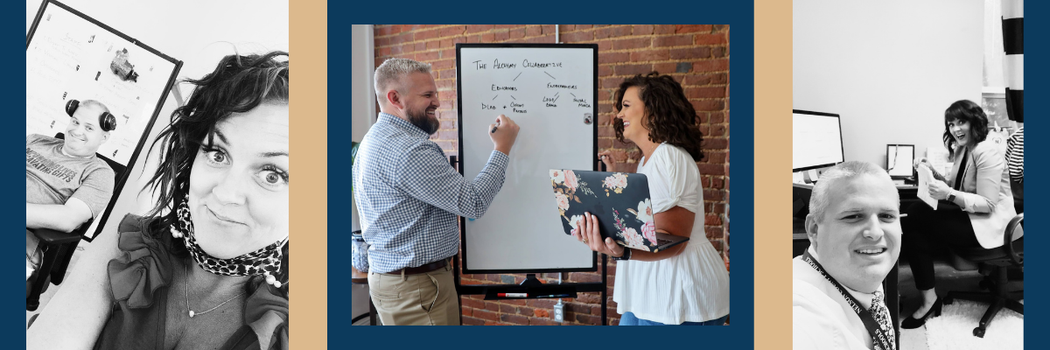
By Brooke Goff June 22, 2026
What happens when your culture lives only in people's heads? The three school communications systems every organization needs but rarely builds.
the golden lens

sign up to our newsletter to stay updated!

Contact Us

SHARE THIS

learn how we can help