


vibrant learning and accountability: moving from checklists to stories


By Brooke Goff September 19, 2025


how do you know when vibrant learning is really happening in your schools?


That’s a question leaders across Kentucky (and beyond) are asking right now. Teachers are designing projects, principals are walking classrooms, and districts are sharing success stories. But how do all those pieces connect into a system of accountability that feels authentic, sustainable, and clear?


At Alchemy, we’ve been in dozens of these conversations lately, from small rural districts to larger suburban systems. Here’s what we’re learning about the real work of vibrant learning and accountability.


defining vibrant learning comes first


Before you can measure it, you have to name it. In district after district, we hear leaders admit that many teachers can’t yet define what a “vibrant learning experience” looks like in practice. That’s not failure... it’s the starting line.


Accountability isn’t only about collecting data. It’s about building shared language. When leaders clarify “this is what counts as vibrant learning,” they give teachers, principals, and families a common picture to aim toward.


accountability needs both proof points and stories


Numbers matter. Tools like walkthrough forms, surveys, and observation rubrics provide consistency. But stories matter too.


Think about a middle school where students create podcasts instead of book reports, or a high school auto tech class where students rebuild real engines. These are living examples of vibrant learning AND portraits of a learner in action.


Strong accountability systems balance both:

  • Proof points (data, rubrics, checklists).
  • Stories (authentic snapshots that bring the work to life).


teachers can’t carry the accountability load alone


When accountability is framed as “another thing” for teachers to fill out, it rarely lasts. The smarter model we’ve seen emerge:


  • Teachers share quick snapshots of classroom work.
  • Principals and directors curate the best examples.
  • District leaders expand those into fuller case studies and community-facing stories.


This division of labor keeps the focus where it belongs: teachers on teaching, leaders on systems.


equity matters: don’t forget high schools


Elementary classrooms often generate the most visible stories: art projects, science fairs, and community readers are easy to photograph and share. These stories matter because they build momentum and help families see the joy of learning early on.


But vibrant learning has some of its deepest real-world connections at the high school level. Career pathways, STEM projects, vocational labs, and internships all put students in spaces where their work mirrors the real world. These are powerful, high-impact examples of the Portrait of a Learner in action.


If accountability systems over-index on elementary, they risk overlooking some of the most transformative stories. The opposite is true as well: if we only highlight high school projects, we miss the foundational spark that happens in the early grades.


Leaders must be intentional about lifting stories at every level so families and staff see the full arc of vibrant learning from kindergarten through graduation.


accountability doubles as professional learning


Here’s the hidden power of story collection: every time a principal reviews a teacher’s post and asks, “Does this reflect vibrant learning?” they are reinforcing the definition.


Accountability isn’t separate from growth. It is growth...especially if leaders use it as a coaching tool, not just a compliance exercise.


what districts (and our team at alchemy) are learning


From our work alongside multiple districts, one theme is clear:


  • Accountability is narrative-driven. Numbers prove consistency; stories prove impact.
  • Leadership alignment is key. When principals and superintendents act as curators, teachers can stay focused on classrooms.
  • Tools must serve two audiences.
  • Internal growth → helping staff learn and calibrate what vibrant learning looks like.
  • External trust → showing families and communities that vibrant learning is real.


the bigger picture


The work of vibrant learning and accountability isn’t just about proving outcomes. It’s about building shared understanding and equipping leaders to recognize, curate, and communicate what great learning looks like.


When districts get this right, accountability stops feeling like a checklist. It becomes a story of growth, trust, and transformation.


explore more stories around local accountability here.


read our most recent posts

By Brooke Goff July 21, 2026
Most principals are watching local accountability happen from the hallway. You don't have to wait for an invitation. There is a teacher in a school you probably know. Maybe you have someone like her on your team right now. She runs the PLCs. She sits in on planning sessions across grade levels. She knows which classrooms are doing cross-curricular vibrant learning work this quarter, and she knows which teachers need extra support to pull it off. When something remarkable happens in a student's learning, she finds out. She takes the photos. She writes the caption. She is the reason the school's story gets told at all. And she is one person. When local accountability arrives at your building (and it is arriving) it is going to ask for documented vibrant learning evidence, a Portrait of a Learner that lives somewhere public, data that shows your community what your school actually stands for. And if your answer to any of those requests runs through one person's head, one person's phone camera, one person's memory of what happened in third period on a random Tuesday in October, you have a fragility problem. Not a people problem. A systems problem. And it is fixable, but only if you start now, before the district finishes building the dashboard you will eventually be feeding. Here is what I want principals to know before anything else: you are not behind. You are not failing. The local accountability conversation in Kentucky has been happening almost entirely at the district level, and the assumption buried inside a lot of that work is that principals are naturally in the loop. That superintendents are passing information down. That buildings are ready. Most of them are not. And that is not the principal's fault.  What is within a principal's control right now is whether the work already happening in their building gets captured in a way that will matter later. Not a new initiative. Not a new platform. Not a new committee. Three practices, intentionally done, that most strong principals are already doing accidentally.
By Brooke Goff July 7, 2026
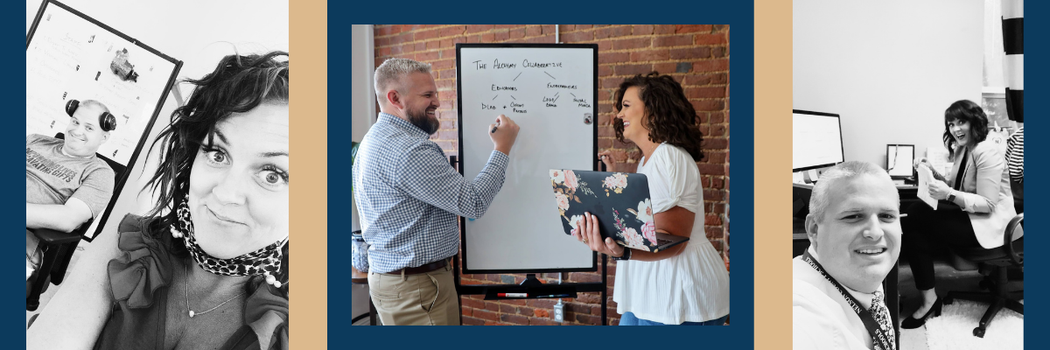
We didn't raise our rates. A client assumed we had. Four systems that explain what changed -- and what AI made possible that wasn't possible before.
By Brooke Goff June 22, 2026
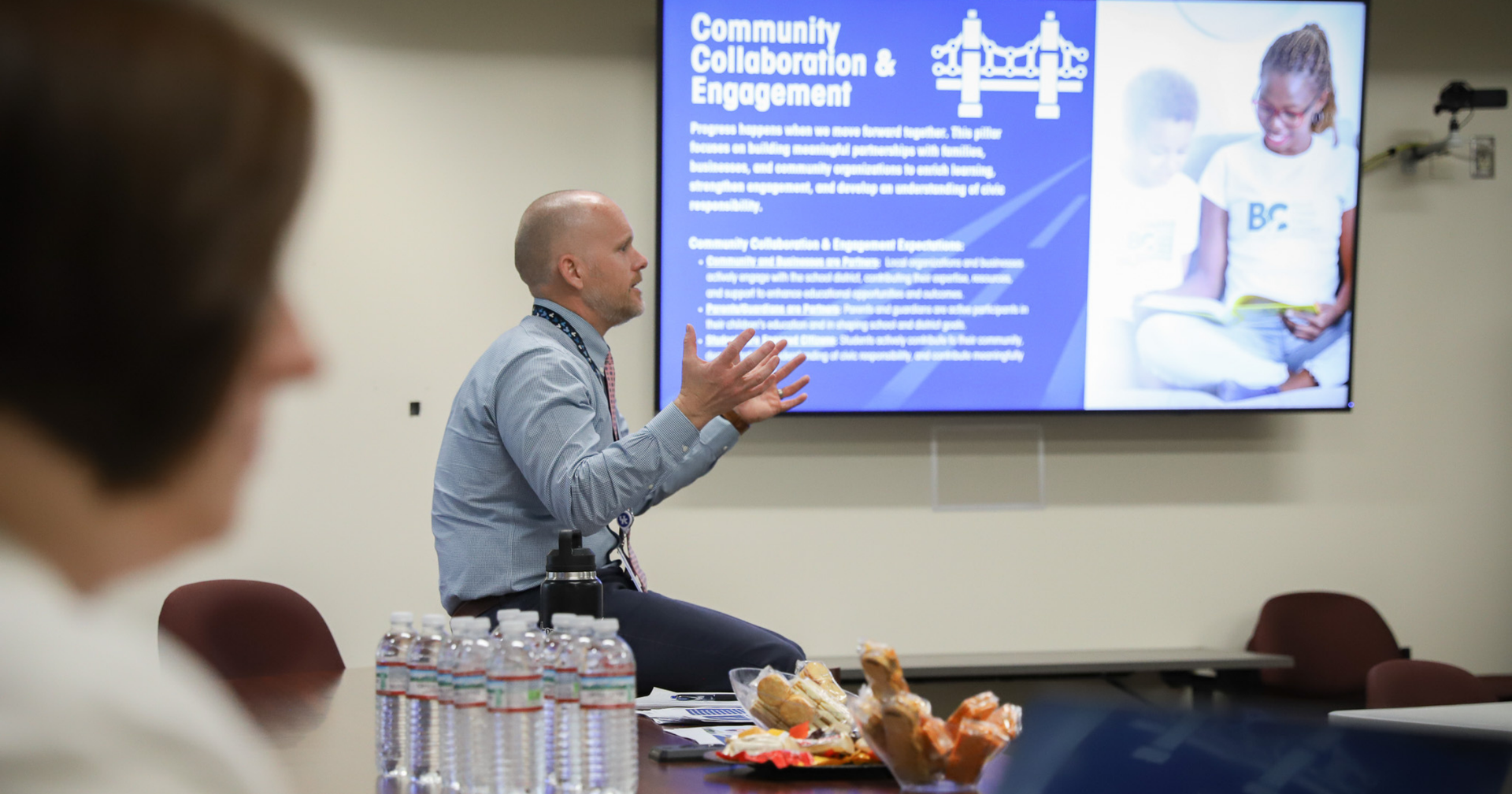
What happens when your culture lives only in people's heads? The three school communications systems every organization needs but rarely builds.
the golden lens

sign up to our newsletter to stay updated!

Contact Us

SHARE THIS

learn how we can help