
from vision to daily celebration: making the hcs graduate profile accessible for every learner


By Brooke Goff August 18, 2025

setting the stage: a vision for more than test scores


Hardin County Schools created its Portrait of a Learner (POL) to define success beyond test scores. District leaders knew true readiness for life after graduation required more than academic achievement alone. They invited families, educators, and community partners into the process, co-creating a shared promise about the knowledge, skills, and values every HCS graduate should carry into their future.


This vision set the course for the district. The Portrait became not just a document, but a compass for shaping classrooms, culture, and community trust.


the bluegrass challenge: turning vision into daily practice


At Bluegrass Middle School, leaders believed deeply in the district’s Portrait of a Learner. But they faced a challenge: how to make it visible and accessible in the daily lives of middle school students.


The district’s competencies were clear and aspirational, but the language often felt abstract. For students in grades 6–8, connecting lofty ideals to everyday actions wasn’t always easy.


The opportunity was clear. We needed to translate the district’s vision into language and routines students could see, understand, and live out each day.


translating the competencies for accessibility and alignment


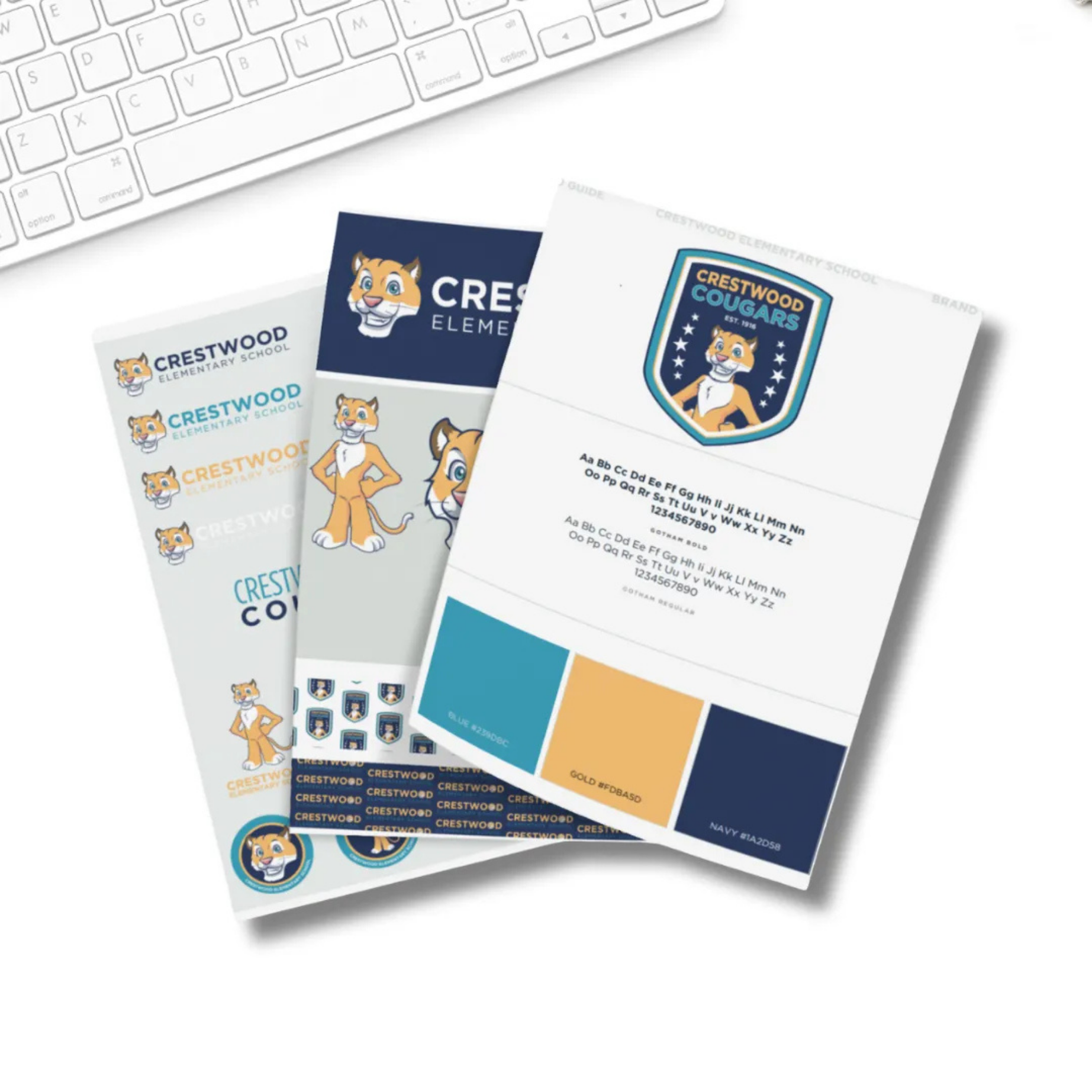
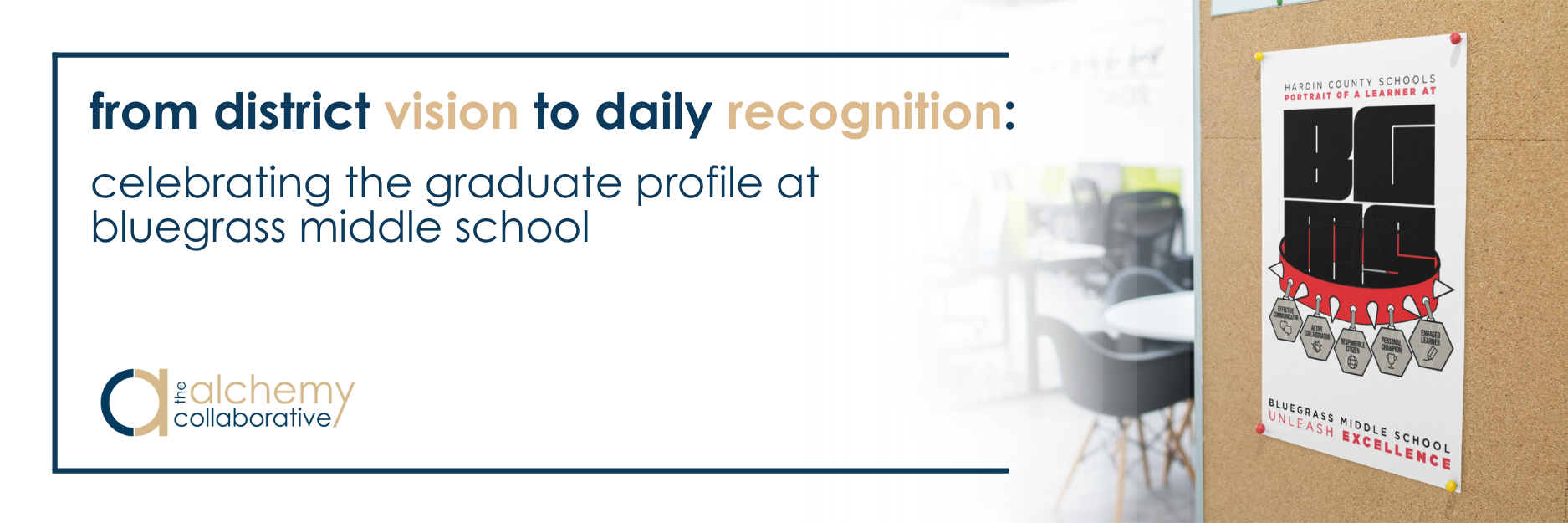
Together, we worked with Bluegrass to reframe their five Portrait of a Learner competencies into student-centered “I can” statements and create visuals that brought them to life in hallways, classrooms, and celebrations.


Bluegrass POL Competency → Translation


  • Effective Communicator → I can share my ideas so others understand.
  • Active Collaborator → I can work with others to get things done.
  • Responsible Citizen → I can make choices that help my school and community.
  • Personal Champion → I can set goals and keep working until I reach them.
  • Engaged Learner → I can stay curious and keep learning every day.

By aligning these translations with Hardin County’s broader vision, Bluegrass ensured consistency for educators and accessibility for students.


the two buckets that make a portrait live


At alchemy collaborative, we often describe the Portrait of a Learner through two connected “buckets”:

  • content — language, visuals, and storytelling that make the vision memorable and accessible. This is how a Portrait shows up in words and images that everyone can understand and repeat.
  • systems — routines, structures, and vibrant learning experiences that make it real every day. This is where competencies become part of instruction, recognition, and culture.


When content and systems connect, the Portrait moves from being a poster to being a lived experience.


building the recognition system at bluegrass


At Bluegrass Middle, the “systems” bucket took shape as a recognition program that ensured students saw and celebrated the competencies in action:


  • staff nominations — quick digital forms for recognizing students who model competencies.
  • certificates + icons — custom-designed certificates tied to the five competencies.
  • stickers + incentives — a series of collectible stickers tied to recognition, building student excitement.
  • social media shoutouts — ready-to-use templates to highlight students and staff online.
  • staff recognition — opportunities for teachers to recognize one another for modeling competencies.


These daily routines made the Portrait tangible for students and visible for families.


why this matters: from accessibility to transformation


Here’s where the partnership with elevatED studios matters. Their work reminds us that a Portrait of a Learner is only powerful when it is lived out in daily experiences. Transformation doesn’t happen when competencies stay abstract. It happens when students practice them, reflect on them, and see them celebrated in authentic ways.

By pairing alchemy’s storytelling and design work with elevatED’s commitment to transformational, vibrant learning, the Bluegrass system becomes more than a recognition program. It’s an on-ramp for deeper cultural change across classrooms and schools.


scaling the impact: from school to district


Hardin County Schools’ Portrait of a Learner now has momentum at multiple levels:

  • district — alignment of policies and priorities to ensure the POL is a guiding compass.
  • school — branding and recognition systems, like Bluegrass’s, that keep the POL visible and celebrated.
  • classroom — instructional design and performance tasks that help students practice and reflect on competencies in authentic ways.


When these levels work in concert, the Portrait becomes a connected system that prepares every learner for the future their community envisions.


the takeaway


At Bluegrass Middle, the Portrait of a Learner is becoming more than a poster on the wall — it’s becoming part of school life. Students can name and celebrate the competencies. Staff recognize and reinforce them. Families see visible evidence of the district’s promise in action.


This work shows how a Portrait of a Learner moves from vision to daily celebration — and how accessibility is the first step toward transformation.


Download the free Portrait Translation Toolkit here.


read our most recent posts

By Brooke Goff July 21, 2026
Most principals are watching local accountability happen from the hallway. You don't have to wait for an invitation. There is a teacher in a school you probably know. Maybe you have someone like her on your team right now. She runs the PLCs. She sits in on planning sessions across grade levels. She knows which classrooms are doing cross-curricular vibrant learning work this quarter, and she knows which teachers need extra support to pull it off. When something remarkable happens in a student's learning, she finds out. She takes the photos. She writes the caption. She is the reason the school's story gets told at all. And she is one person. When local accountability arrives at your building (and it is arriving) it is going to ask for documented vibrant learning evidence, a Portrait of a Learner that lives somewhere public, data that shows your community what your school actually stands for. And if your answer to any of those requests runs through one person's head, one person's phone camera, one person's memory of what happened in third period on a random Tuesday in October, you have a fragility problem. Not a people problem. A systems problem. And it is fixable, but only if you start now, before the district finishes building the dashboard you will eventually be feeding. Here is what I want principals to know before anything else: you are not behind. You are not failing. The local accountability conversation in Kentucky has been happening almost entirely at the district level, and the assumption buried inside a lot of that work is that principals are naturally in the loop. That superintendents are passing information down. That buildings are ready. Most of them are not. And that is not the principal's fault.  What is within a principal's control right now is whether the work already happening in their building gets captured in a way that will matter later. Not a new initiative. Not a new platform. Not a new committee. Three practices, intentionally done, that most strong principals are already doing accidentally.
By Brooke Goff July 7, 2026
We didn't raise our rates. A client assumed we had. Four systems that explain what changed -- and what AI made possible that wasn't possible before.
By Brooke Goff June 22, 2026
What happens when your culture lives only in people's heads? The three school communications systems every organization needs but rarely builds.
the golden lens

sign up to our newsletter to stay updated!

Contact Us

SHARE THIS

learn how we can help